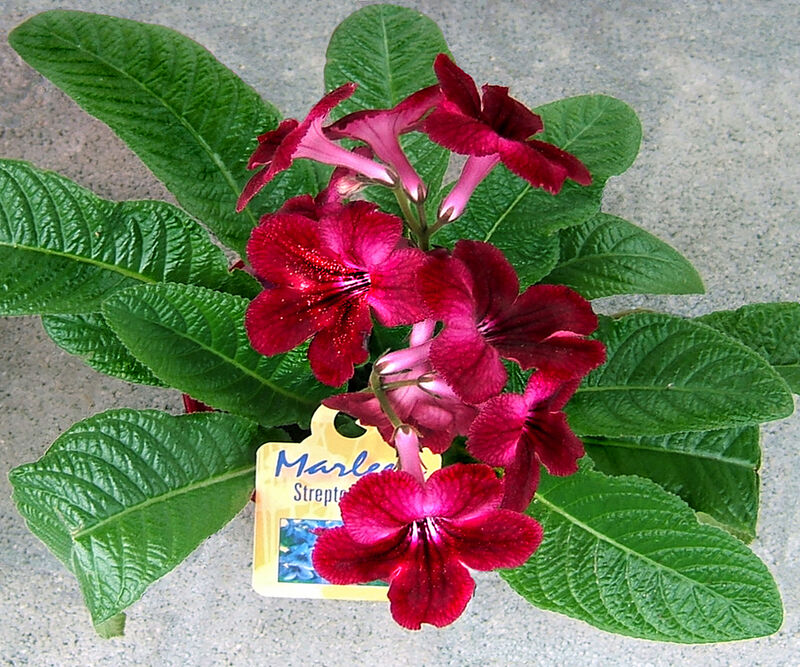
Cape Primrose
Streptocarpus hybridus
Streptocarpus hybridus is a flowering houseplant that produces arching sprays of trumpet-shaped blooms — in white, purple, pink, blue, and red, often with beautifully veined or patterned throats — from velvety, elongated leaves that form a low rosette. Your plant can bloom for up to 10 months of the year given good indirect light, which makes it one of the more generous flowering houseplants around. It is closely related to the African violet and shares its easygoing temperament, making it accessible to most gardeners.
How to grow Cape Primrose
bright indirect light (3-6 feet
water thoroughly (water until it
60-70%
15-26°C
Shallow pots with African violet
Leaf cuttings are the standard
Botrytis, powdery mildew, aphids, mealybugs,
Fun Facts
The genus name Streptocarpus comes from the Greek words for 'twisted fruit' — a reference to the spirally coiled seed pods the plant produces after flowering. When ripe and dry, the pods unfurl in a helical fashion reminiscent of a narwhal's tusk.
Pet safe
Non-toxic to cats, dogs, and horses according to the ASPCA. Considered pet-friendly.
Sources
- Cape Primrose (Streptocarpus saxorum) | Clemson University HGIC (opens in new tab)Reference
- How to Grow and Flower Cape Primroses (Streptocarpus) - Logee's Plants (opens in new tab)Reference
- How to Grow and Flower Cape Primroses (Streptocarpus) – Logee's Plants (opens in new tab)Reference
- Streptocarpus - Wikipedia (opens in new tab)Reference
- Streptocarpus - Wikipedia (opens in new tab)Reference
- Streptocarpus | North Carolina Extension Gardener Plant Toolbox (opens in new tab)Reference
- Streptocarpus | RHS Growing Guide (opens in new tab)Reference
- Streptocarpus | RHS Growing Guide (opens in new tab)Royal Horticultural Society
- Cape Primrose (Streptocarpus saxorum) | Clemson University HGIC (opens in new tab)University Extension
- Streptocarpus | North Carolina Extension Gardener Plant Toolbox (opens in new tab)University Extension