Silver Pothos
Scindapsus pictus
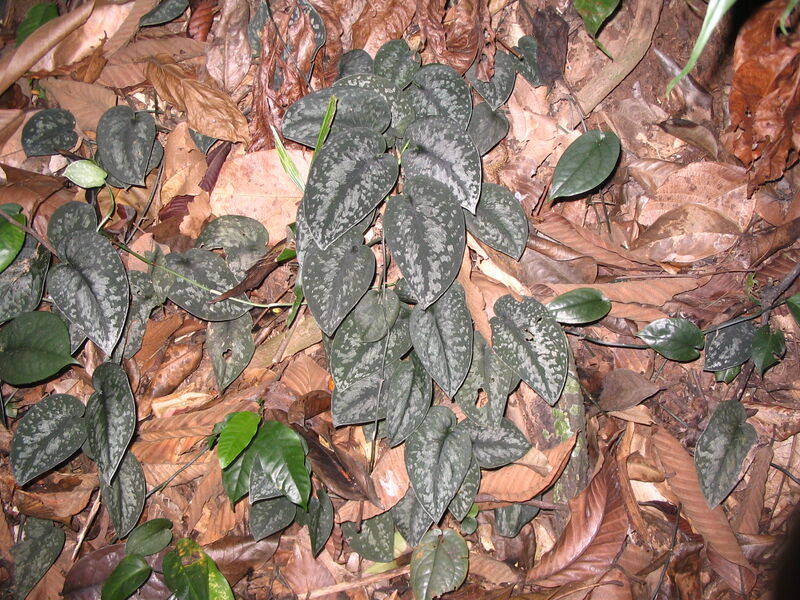
Despite being widely sold as 'Silver Pothos', Scindapsus pictus is not actually a Pothos at all — it belongs to a completely different genus and is more closely related to Philodendrons. What it does share with its namesake is a talent for surviving neglect: the heart-shaped, matte-green leaves with irregular silver-gray variegation look sophisticated even in a dim corner. The 'Argyraeus' cultivar has smaller, more spotted leaves while 'Exotica' has larger leaves with broader silver patches.
How to grow Silver Pothos
bright indirect light (3-6 feet
Allow the top 2 inches
40%
65-85F (18-29C); minimum 60F (15C).
20-30%
Stem cuttings are easy and
Root rot from overwatering is
Fun Facts
The silver markings on Scindapsus pictus leaves are not paint or coating — they are caused by air pockets just below the leaf surface that reflect light differently from the surrounding cells, creating a genuinely iridescent effect
Toxic to pets
Toxic to cats, dogs, and humans; contains calcium oxalate crystals which cause drooling, oral swelling, vomiting, and difficulty swallowing if ingested. Keep out of reach of pets and children
Sources
- How to Care for Scindapsus Pictus - The Satin Pothos That Isn't a Pothos - Garden Betty (opens in new tab)Reference
- How to Care for Scindapsus Pictus — The Satin Pothos That Isn't a Pothos - Garden Betty (opens in new tab)Reference
- How to Care for the Scindapsus pictus | Plants 101 - The Sill (opens in new tab)Reference
- How to Care for the Scindapsus pictus | Plants 101 - The Sill (opens in new tab)Reference
- Satin Pothos (Silver Pothos) Care: Growing Scindapsus Pictus - Leafy Place (opens in new tab)Reference
- Satin Pothos (Silver Pothos) Care: Growing Scindapsus Pictus - Leafy Place (opens in new tab)Reference
- Satin Pothos Care: How to Grow Scindapsus Pictus - Smart Garden Guide (opens in new tab)Reference
- Satin Pothos Care: How to Grow Scindapsus Pictus - Smart Garden Guide (opens in new tab)Reference