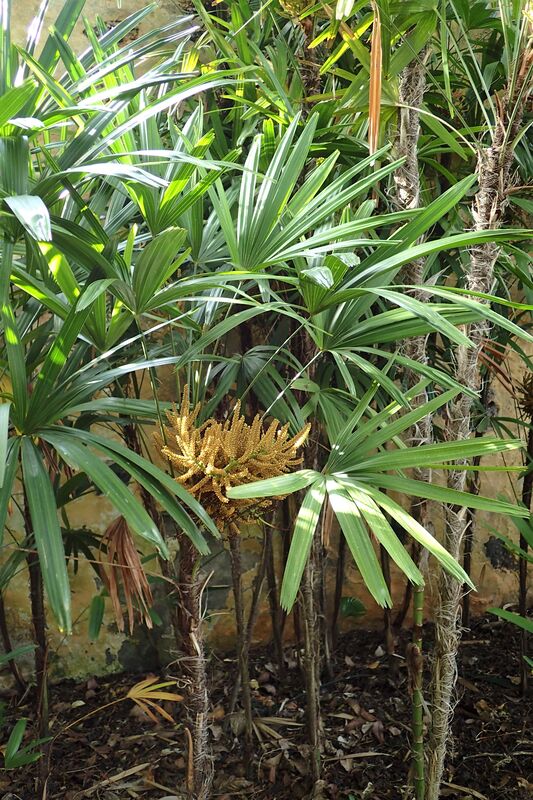
Lady Palm
Rhapis excelsa
Lady Palm is about as close as you can get to a foolproof indoor palm — it's slow-growing, tolerates low light, stays compact, handles neglect better than most, and is completely non-toxic to pets. Your plant produces glossy, dark green fan-shaped leaves on slender, bamboo-like stems and will slowly form a lush multi-stemmed clump over time. NASA ranked it near the top of their Clean Air Study for removing formaldehyde, ammonia, xylene, and toluene from indoor air, which is a nice bonus on top of the looks.
How to grow Lady Palm
Bright, indirect light to partial shade.
50%
Tolerates average household humidity but
60-80°F
Well-draining, organically rich potting mix.
Division of the clumping stems
Generally pest-resistant but can get
Fun Facts
Rhapis excelsa ranked second overall in NASA's Clean Air Study for removing indoor air pollutants — specifically formaldehyde, ammonia, xylene, and toluene — and received the RHS Award of Garden Merit as well.
Pet safe
Non-toxic to dogs, cats, and horses (ASPCA confirmed). Safe for children and pets.
Sources
- Lady Palm (Rhapis Excelsa) Care Guide - Our Houseplants (opens in new tab)Reference
- Lady Palm (Rhapis Excelsa) Care Guide — Our Houseplants (opens in new tab)Reference
- Lady Palm (Rhapis excelsa) - Gardenia (opens in new tab)Reference
- Lady Palm (Rhapis excelsa) — Gardenia (opens in new tab)Reference
- Rhapis excelsa - NC State Extension Gardener Plant Toolbox (opens in new tab)University Extension
- Rhapis excelsa — NC State Extension Gardener Plant Toolbox (opens in new tab)University Extension
- Rhapis excelsa: Lady Palm - University of Florida IFAS Extension (opens in new tab)University Extension
- Rhapis excelsa: Lady Palm — University of Florida IFAS Extension (opens in new tab)University Extension