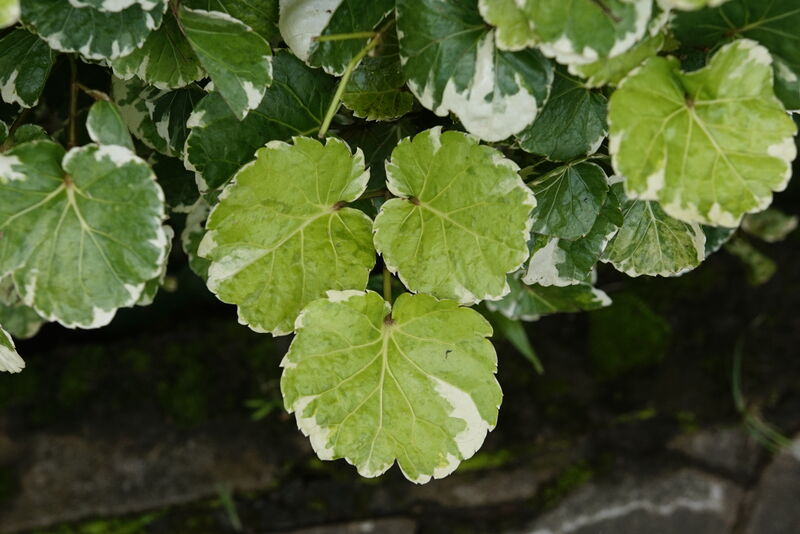
Variegated Balfour Aralia
Polyscias balfouriana
Balfour Aralia gets its 'Dinner Plate' nickname honestly — the round, leathery leaves are 1–2 inches across and arranged on upright stems in a way that does, in fact, look like a tiny stack of dishes. The variegated form adds cream-colored margins to that already distinctive look, making it one of the more elegantly patterned aralias you can grow. Your plant needs warmth, high humidity, and consistent care — it's a bit dramatic about temperature swings and dry air, so treat it like the tropical it is.
How to grow Variegated Balfour Aralia
Bright, indirect light.
Keep soil consistently moist but not waterlogged.
60-80%
59-81°F
Light, well-draining potting mix rich
Stem tip cuttings taken in spring or summer.
Mealybugs, scale, spider mites, and
Fun Facts
Balfour Aralia is notorious for leaf drop when moved — it genuinely hates change. Even rotating the pot can trigger a sulky shed of leaves, so find a good spot and leave it there.
Toxic to pets
Toxic to pets and mildly toxic to humans (ASPCA confirmed). Contains saponins throughout the plant - ingestion causes swelling and burning in the mouth and throat, vomiting, diarrhea, and abdominal pain. Keep out of reach of children and animals.
Sources
- Aralia balfouriana Care - Home Plants Guide (opens in new tab)Reference
- Aralia balfouriana Care — Home Plants Guide (opens in new tab)Reference
- Balfour Aralia - Poisonous Plant for Pets (opens in new tab)Reference
- Balfour Aralia Care Guide - Houseplant 411 (opens in new tab)Reference
- Balfour Aralia Care Guide — Houseplant 411 (opens in new tab)Reference
- Balfour Aralia — Poisonous Plant for Pets (opens in new tab)Reference
- Polyscias balfouriana - NC State Extension Gardener Plant Toolbox (opens in new tab)University Extension
- Polyscias balfouriana — NC State Extension Gardener Plant Toolbox (opens in new tab)University Extension