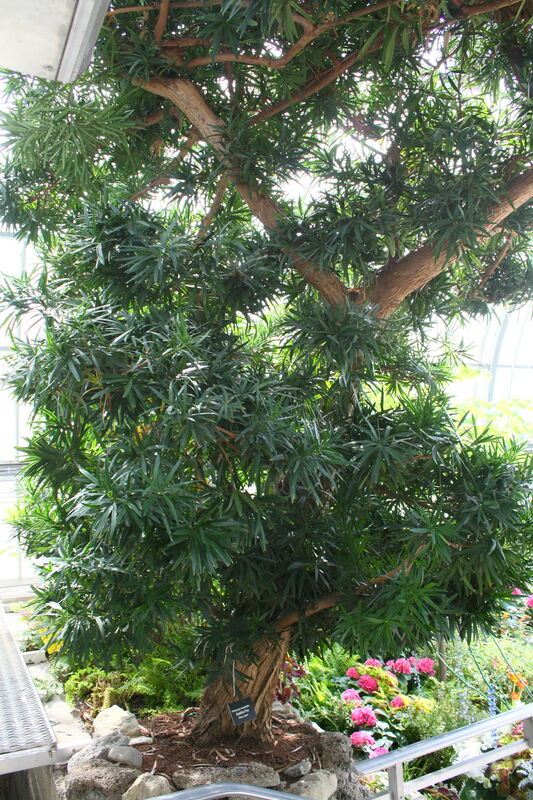
Podocarpus
Podocarpus macrophyllus
Podocarpus macrophyllus is the plant that doesn't know whether it wants to be a hedge, a bonsai, a houseplant, or a 66-foot tree — and it succeeds at all of them. Indoors, your plant stays manageable at around 6 feet and responds beautifully to pruning, making it a top pick for topiary and bonsai work. Keep it away from pets and kids though: the berries and leaves are toxic, and the ASPCA lists it clearly as one to watch.
How to grow Podocarpus
Bright light with 4-6 hours
water thoroughly (water until it
40-60%
60-75°F
Well-draining, organically rich potting mix
Tip cuttings taken in fall,
Scale, whiteflies, and aphids can
Fun Facts
Podocarpus macrophyllus is the state tree of Chiba Prefecture in Japan, where it is called 'Inumaki.' Its wood is highly prized in Okinawa for traditional housing because of its natural resistance to termites and water.
Toxic to pets
Toxic to dogs, cats, horses, and humans (ASPCA confirmed). Fruits and leaves contain a poisonous substance - ingestion causes vomiting, diarrhea, drooling, and abdominal pain. The seed is the most dangerous part; the fleshy aril around it is edible for birds but the seed itself is not.
Sources
- Podocarpus macrophyllus - Missouri Botanical Garden Plant Finder (opens in new tab)Botanical Garden
- Podocarpus macrophyllus — Missouri Botanical Garden Plant Finder (opens in new tab)Botanical Garden
- Buddhist Pine - ASPCA Toxic and Non-Toxic Plants (opens in new tab)Reference
- Buddhist Pine — ASPCA Toxic and Non-Toxic Plants (opens in new tab)Reference
- Growing Podocarpus Macrophyllus: Care Tips for the Fern Pine - Plant Care Today (opens in new tab)Reference
- Growing Podocarpus Macrophyllus: Care Tips for the Fern Pine — Plant Care Today (opens in new tab)Reference
- Podocarpus macrophyllus - Wikipedia (opens in new tab)Reference
- Podocarpus macrophyllus — Wikipedia (opens in new tab)Reference