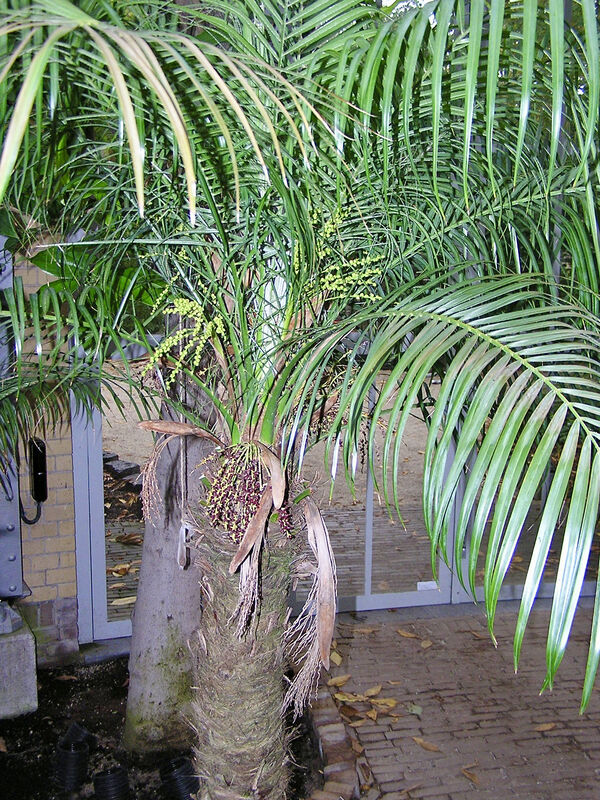
Pigmy Date Palm
Phoenix roebelenii
Phoenix roebelenii is a slow-growing, slender palm that typically reaches 5-7 feet indoors and around 6-12 feet outdoors, with gracefully arching pinnate fronds up to 4 feet long bearing around 100 narrow, soft-textured grey-green leaflets. It is arguably the most popular ornamental palm in the world for good reason: it looks like a full-sized tropical palm, stays small enough for a living room, and tolerates indoor conditions better than most of its relatives. The lower leaflets on each frond are modified into sharp, stiff spines — something to know before reaching in bare-handed.
How to grow Pigmy Date Palm
bright indirect light (3-6 feet
Allow the top 2-3 inches
60-80%
50-75°F
50%
From seed (germination takes 3-4
Spider mites, mealybugs, scale insects,
Fun Facts
Phoenix roebelenii is one of the few palms classified as a rheophyte — a plant adapted to living along fast-moving rivers and surviving periodic flooding. In its native Mekong River habitat it has evolved specifically for a lifestyle most palms could not handle.
Pet safe
Non-toxic to dogs, cats, and horses per ASPCA. The foliage is safe, but the sharp basal spines can cause physical injury and localized pain or swelling if they penetrate skin.
Sources
- Miniature Date Palm - ASPCA Toxic and Non-Toxic Plants (opens in new tab)Reference
- Miniature Date Palm — ASPCA Toxic and Non-Toxic Plants (opens in new tab)Reference
- Phoenix roebelenii - Wikipedia (opens in new tab)Reference
- Phoenix roebelenii Care Indoors - Home Plants Guide (opens in new tab)Reference
- Phoenix roebelenii Care Indoors — Home Plants Guide (opens in new tab)Reference
- Phoenix roebelenii — NC State Extension Gardener Plant Toolbox (opens in new tab)Reference
- Phoenix roebelenii — Wikipedia (opens in new tab)Reference
- Phoenix roebelenii - NC State Extension Gardener Plant Toolbox (opens in new tab)University Extension