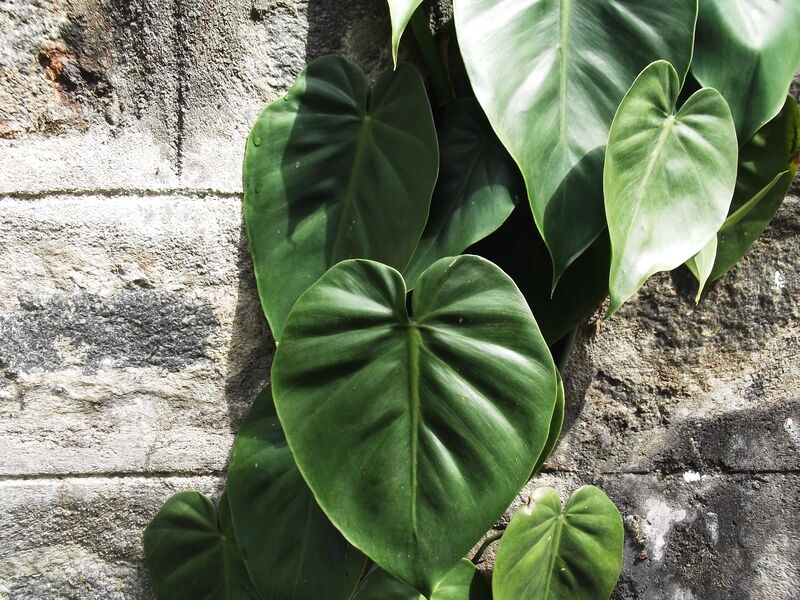
Heart-Leaf Philodendron
Philodendron scandens
Philodendron scandens — still widely sold under this name despite a taxonomic reclassification — is a vigorous tropical viner with shiny, heart-shaped leaves and an impressive tolerance for indoor conditions. It trails naturally from a hanging basket or climbs eagerly up a moss pole, and the care requirements are about as uncomplicated as it gets in the world of tropicals. Think of it as the plant equivalent of a reliable first car: not the flashiest option, but it shows up every day and does the job without drama.
How to grow Heart-Leaf Philodendron
bright indirect light (3-6 feet
Keep soil consistently damp but not saturated.
40%
65-80°F
Well-draining mix with organic matter
Stem tip cuttings just below
Aphids, scale, spider mites, fungus
Fun Facts
The name Philodendron scandens is technically a synonym — most botanical authorities now classify this plant as Philodendron hederaceum, a name dating to 1829, but P. scandens remains widespread in horticulture because old nursery labels die hard.
Toxic to pets
Toxic to dogs, cats, and horses. Contains insoluble calcium oxalate crystals. Ingestion causes oral irritation, swelling of the mouth and throat, excessive drooling, vomiting, and difficulty swallowing.
Sources
- Why Philodendron hederaceum Is the Correct Name for P. scandens - UBC Botanical Garden Forums (opens in new tab)Botanical Garden
- Heart-Leaf Philodendron Complete Care and Growing Guide - Gardening Know How (opens in new tab)Reference
- Heart-Leaf Philodendron Complete Care and Growing Guide — Gardening Know How (opens in new tab)Reference
- Philodendron scandens Heart Leaf Philodendron — University of Florida IFAS Extension (opens in new tab)Reference
- Why Philodendron hederaceum Is the Correct Name for P. scandens — UBC Botanical Garden Forums (opens in new tab)Reference
- Philodendron scandens Heart Leaf Philodendron - University of Florida IFAS Extension (opens in new tab)University Extension