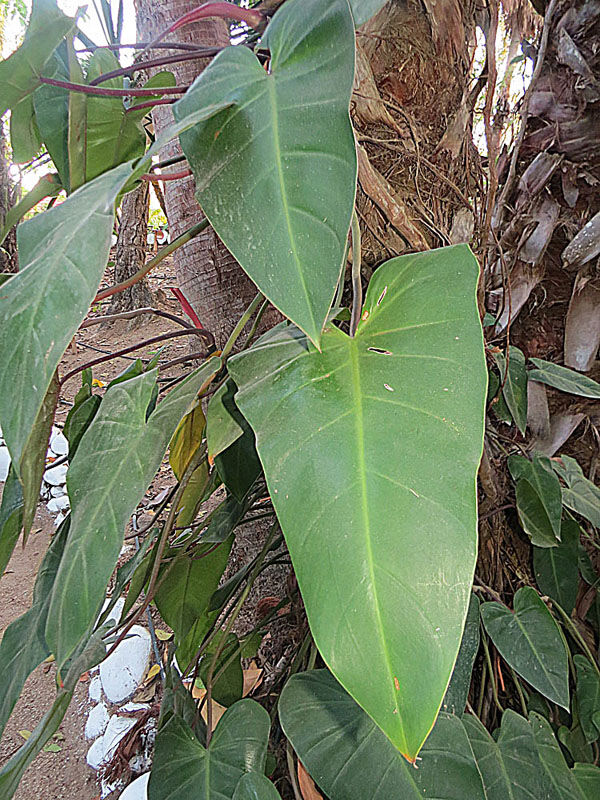
heartleaf philodendron
Philodendron hederaceum
Philodendron hederaceum is probably the most forgiving houseplant in this entire genus — a vining tropical with glossy, heart-shaped green leaves that tolerates low light, irregular watering, and general neglect without putting up much of a fuss. You can train it to trail from a hanging basket, climb a moss pole for larger leaves, or just let it sprawl across a shelf. Either way, it grows fast and makes a genuinely difficult plant to kill, which has made it a staple of offices, dorm rooms, and beginner collections for decades.
How to grow heartleaf philodendron
bright indirect light (3-6 feet
Keep the soil consistently moist but not soggy.
40%
65-85°F
Chunky, well-draining mix is best.
Stem cuttings just below a
Aphids, spider mites, fungus gnats,
Fun Facts
Philodendron hederaceum has accumulated more synonyms than almost any other houseplant — P. scandens, P. oxycardium, P. micans, and P. pittieri all refer to the same species, a legacy of 19th-century botanists working in overlapping territories with no way to compare notes quickly.
Toxic to pets
Toxic to dogs, cats, and horses per ASPCA. Toxic principle is insoluble calcium oxalate crystals. Clinical signs include oral irritation, pain and swelling of the mouth, tongue and lips, excessive drooling, vomiting, and difficulty swallowing.
Sources
- Heartleaf Philodendron - ASPCA Toxic and Non-Toxic Plants (opens in new tab)Reference
- Heartleaf Philodendron Care - Guide to Houseplants (opens in new tab)Reference
- Heartleaf Philodendron Care — Guide to Houseplants (opens in new tab)Reference
- Heartleaf Philodendron — ASPCA Toxic and Non-Toxic Plants (opens in new tab)Reference
- Philodendron hederaceum - Wikipedia (opens in new tab)Reference
- Philodendron hederaceum — Wikipedia (opens in new tab)Reference
- Philodendron scandens Heart Leaf Philodendron — University of Florida IFAS Extension (opens in new tab)Reference
- Philodendron scandens Heart Leaf Philodendron - University of Florida IFAS Extension (opens in new tab)University Extension