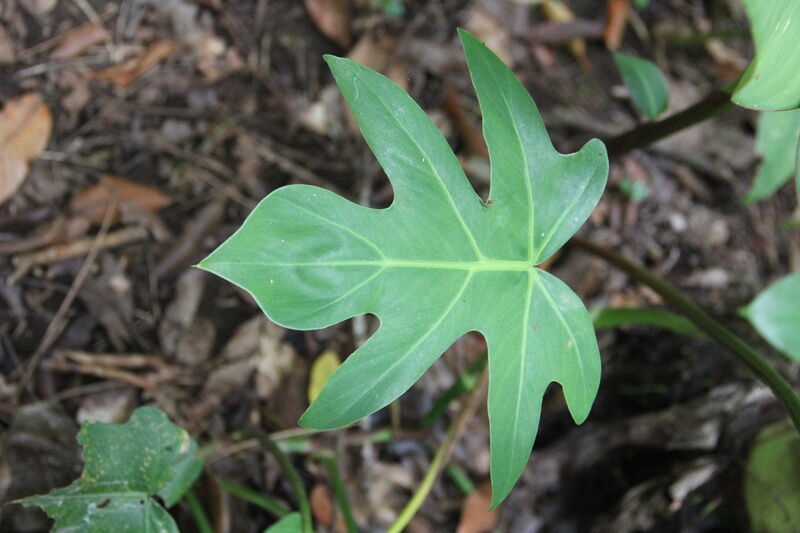
Fiddle-Leaf Philodendron
Philodendron bipennifolium
Philodendron bipennifolium is a fast-growing tropical climber with large, glossy olive-green leaves shaped unmistakably like a violin or a horse's head — the plant has two common names because people cannot agree on which comparison is more accurate. New leaves emerge in a bright neon yellow before maturing to rich green, and each leaf can stretch 10 to 18 inches long on mature plants. Give it a moss pole to climb and it will reward you with progressively larger and more dramatic foliage.
How to grow Fiddle-Leaf Philodendron
bright indirect light (3-6 feet
Keep soil consistently moist but
50-70%
70-80°F
Well-draining, slightly acidic loamy mix
Stem cuttings with at least
Spider mites, mealybugs, scale, and
Fun Facts
New leaves on Philodendron bipennifolium emerge bright neon yellow before slowly darkening to deep green as they mature — the same plant can look like two completely different species depending on which leaves you are looking at.
Toxic to pets
Toxic to humans, dogs, and cats. Contains insoluble calcium oxalate crystals that cause oral irritation, swelling, excessive drooling, and difficulty swallowing if chewed or ingested. Keep out of reach of children and pets.
Sources
- Philodendron bipennifolium - Plants of the World Online (Kew Science) (opens in new tab)Botanical Garden
- How to Plant, Grow, and Care For Fiddleleaf Philodendron - Epic Gardening (opens in new tab)Reference
- How to Plant, Grow, and Care For Fiddleleaf Philodendron — Epic Gardening (opens in new tab)Reference
- Philodendron Bipennifolium Complete Growing Guide - Plant America (opens in new tab)Reference
- Philodendron Bipennifolium Complete Growing Guide — Plant America (opens in new tab)Reference
- Philodendron bipennifolium Horsehead Philodendron — University of Florida IFAS Extension (opens in new tab)Reference
- Philodendron bipennifolium — Plants of the World Online (Kew Science) (opens in new tab)Reference
- Philodendron bipennifolium Horsehead Philodendron - University of Florida IFAS Extension (opens in new tab)University Extension