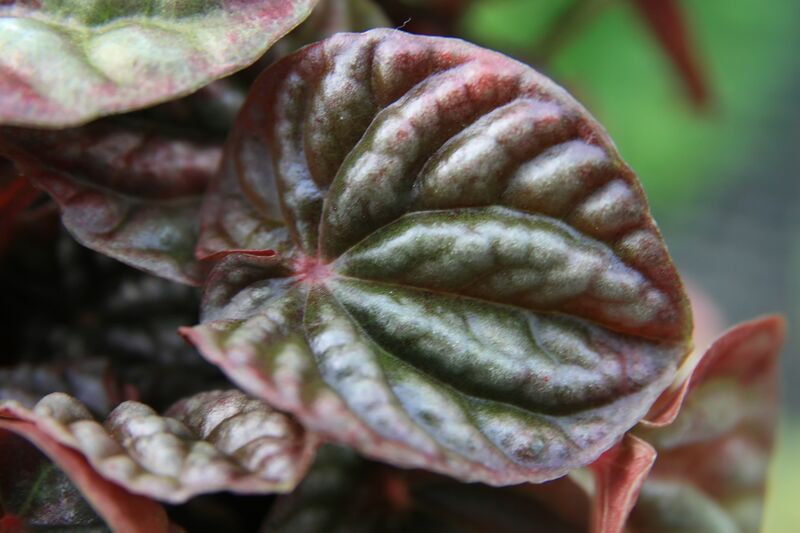
Emerald Ripple
Peperomia caperata
Peperomia caperata is a compact tropical perennial that tops out around 8 inches, making it about as apartment-friendly as houseplants get. Its deeply corrugated, heart-shaped leaves are nearly dark enough to look purple, with pinkish-red petioles and a texture that looks like someone crumpled the whole plant on purpose. Come summer, it sends up slender cream-colored flower spikes that gardeners diplomatically describe as resembling mouse tails.
How to grow Emerald Ripple
bright indirect light (3-6 feet
50%
40-60%
65-80°F
A well-draining, porous potting mix is essential.
Leaf cuttings or stem tip
Mealybugs and spider mites are
Fun Facts
The genus name Peperomia blends the Greek words for 'pepper' (peperi) and 'resembling' (homoios), flagging its family connection to black pepper (Piper nigrum).
Pet safe
Non-toxic to dogs, cats, and horses per ASPCA. Generally considered safe for humans as well.
Sources
- Emerald Ripple Peperomia - ASPCA Toxic and Non-Toxic Plants (opens in new tab)Reference
- Emerald Ripple Peperomia — ASPCA Toxic and Non-Toxic Plants (opens in new tab)Reference
- Peperomia caperata Emerald Ripple Care Guide - Houseplant 411 (opens in new tab)Reference
- Peperomia caperata Emerald Ripple Care Guide — Houseplant 411 (opens in new tab)Reference
- Peperomia caperata — NC State Extension Gardener Plant Toolbox (opens in new tab)Reference
- Peperomia caperata - NC State Extension Gardener Plant Toolbox (opens in new tab)University Extension