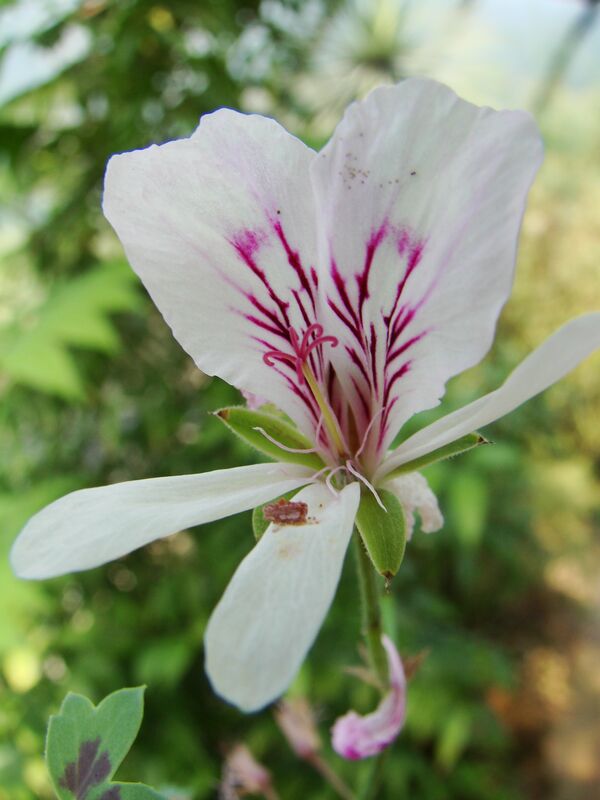
Pelargonium grandiflorum
Pelargonium grandiflorum
Regal Geraniums are the drama queens of the Pelargonium world, producing large, velvety flowers with ruffled petals and dark blotch markings that look more like azaleas or pansies than typical geraniums. Your plant has a shorter but spectacular bloom window — typically late spring to early summer — and requires cool nights to set buds, which is the main reason it can be tricky to rebloom indoors. Once you nail the light and temperature requirements, it rewards you with some of the showiest flowers available in a houseplant.
How to grow Pelargonium grandiflorum
Needs abundant bright light, ideally
Allow the top layer of
60-80%
Prefers 65 to 75°F (18 to 24°C) in summer.
Well-draining potting mix with added
Stem tip cuttings taken in
The most common problem is
Fun Facts
Despite being called 'geraniums,' Pelargoniums are not true geraniums — the name stuck from an 18th-century misclassification when South African plants were lumped together with European Geranium species before botanists sorted out the difference.
Toxic to pets
Toxic to cats, dogs, and horses according to the ASPCA. Active compounds include geraniol and linalool. Signs of ingestion in pets include vomiting, anorexia, depression, and dermatitis. Keep away from pets.
Sources
- Care Tips - Pelargonium Grandiflorum (opens in new tab)Reference
- Care Tips - Pelargonium Grandiflorum (opens in new tab)Reference
- Martha Washington Geranium Care: Growing Regal Geraniums (opens in new tab)Reference
- Martha Washington Geranium Care: Growing Regal Geraniums (opens in new tab)Reference
- Pelargonium x domesticum (Regal Geranium) - Gardenia (opens in new tab)Reference
- Pelargonium x domesticum (Regal Geranium) - Gardenia (opens in new tab)Reference
- Toxic and Non-toxic Plants: Geranium - ASPCA (opens in new tab)Reference
- Toxic and Non-toxic Plants: Geranium - ASPCA (opens in new tab)Reference
- Lady or Martha Washington Geraniums - Iowa State University Extension (opens in new tab)University Extension
- Lady or Martha Washington Geraniums - Iowa State University Extension (opens in new tab)University Extension