Pearly Moonstones
Pachyphytum oviferum
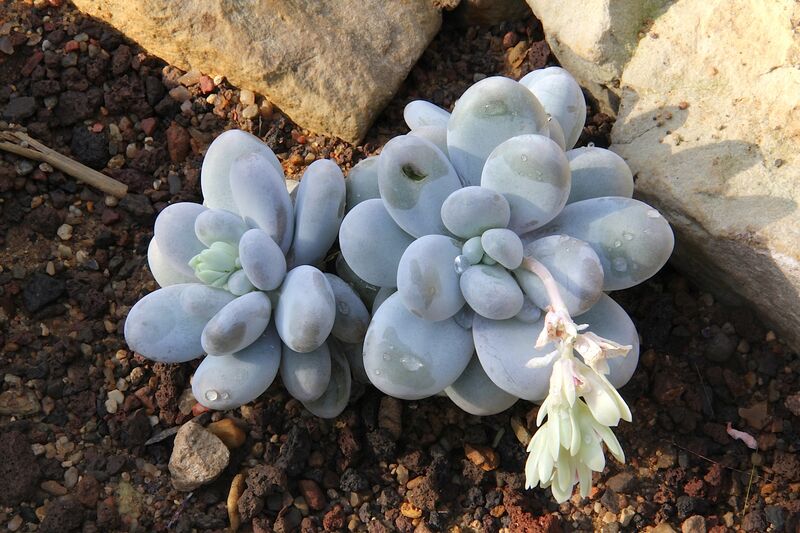
Pearly Moonstones are chunky little succulents with fleshy, egg-shaped leaves coated in a dusty white farina that gives them a pale blue-green to lilac glow — they look almost fake, in the best possible way. Your plant forms compact rosettes that stay small enough for a windowsill, spreading to about 12 inches wide at most. In late winter to early spring it sends up arching stems tipped with clusters of bell-shaped red flowers that are a pleasant surprise on something so understated.
How to grow Pearly Moonstones
Needs bright light - ideally
Soak and dry method: water
Low humidity preferred.
Best between 65°F and 75°F (18 to 24°C).
Cactus and succulent mix, or
Leaf propagation is easy and
Overwatering is the number one
Fun Facts
The name Pachyphytum oviferum translates from Greek and Latin as 'thick plant bearing eggs' — which is a surprisingly accurate description of those plump, oval leaves.
Pet safe
Non-toxic to humans and pets. The plant produces a sap that may mildly irritate skin and eyes in sensitive individuals, so handle with care, but there is no serious toxicity risk.
Sources
- Pachyphytum oviferum - Plants of the World Online (Kew) (opens in new tab)Botanical Garden
- Pachyphytum oviferum - Plants of the World Online (Kew) (opens in new tab)Botanical Garden
- How to Grow and Care for Moonstones Pachyphytum Oviferum (opens in new tab)Reference
- How to Grow and Care for Moonstones Pachyphytum Oviferum (opens in new tab)Reference
- Pachyphytum Oviferum Care: All About Growing Succulent Moonstones (opens in new tab)Reference
- Pachyphytum Oviferum Care: All About Growing Succulent Moonstones (opens in new tab)Reference
- Pachyphytum oviferum (Moonstones) - World of Succulents (opens in new tab)Reference
- Pachyphytum oviferum (Moonstones) - World of Succulents (opens in new tab)Reference
- Pachyphytum oviferum - Wikipedia (opens in new tab)Reference
- Pachyphytum oviferum - Wikipedia (opens in new tab)Reference