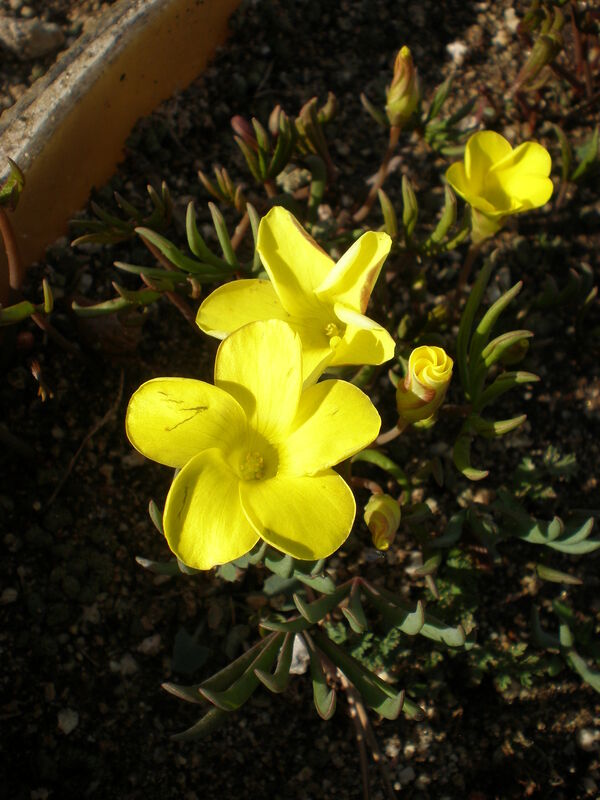
Finger Oxalis
Oxalis flava
Finger Oxalis is a low-growing South African bulb plant reaching about 3-12 inches tall, with attractive hand-shaped grey-green leaves that earned it the 'finger' name. In spring and early summer it produces bright butter-yellow flowers that open in sunlight and close at night or on cloudy days. It grows from small corms and goes dormant after flowering, retreating underground until conditions are right again -- so do not worry when it disappears.
How to grow Finger Oxalis
full sun (6 or more
Water when the surface of
25-49%
Prefers daytime temperatures around 75
Well-draining potting mix for flowering
Divide the corms during the dormant period.
Corm rot from overwatering or
Fun Facts
Oxalis is the only dicotyledonous genus known to produce true corms (compact, bulb-like underground storage organs), making it botanically unusual among the broad-leaved flowering plants.
Toxic to pets
Contains oxalic acid, which is toxic to dogs, cats, and horses in large amounts. Small nibbles cause mouth irritation and gastrointestinal upset; significant ingestion can affect calcium levels and kidney function. The ASPCA lists Oxalis species as toxic to pets.
Sources
- Good Luck Plant (Oxalis) - ASPCA Toxic and Non-Toxic Plants (opens in new tab)ASPCA
- Good Luck Plant (Oxalis) - ASPCA Toxic and Non-Toxic Plants (opens in new tab)ASPCA
- Oxalis - PlantZAfrica, South African National Biodiversity Institute (opens in new tab)Botanical Garden
- How to Grow Finger Oxalis (O. flava) - World-Population.net House Plants Guide (opens in new tab)Reference
- How to Grow Finger Oxalis (O. flava) - World-Population.net House Plants Guide (opens in new tab)Reference
- Oxalis - PlantZAfrica, South African National Biodiversity Institute (opens in new tab)Reference
- South African Oxalis - Pacific Bulb Society (opens in new tab)Reference
- South African Oxalis - Pacific Bulb Society (opens in new tab)Peer-Reviewed