Window Leaf
Monstera obliqua
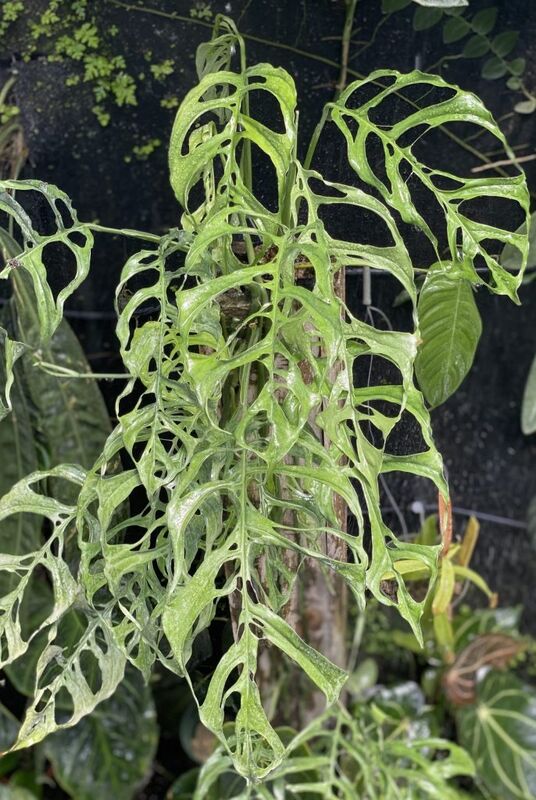
Monstera obliqua is one of the rarest houseplants in existence: its paper-thin leaves can be up to 90% holes, leaving a skeletal, lace-like mesh of tissue that looks structurally improbable. The plant community has a running joke -- 'it's never obliqua' -- because true specimens are so rare and expensive that most plants sold under this name are actually Monstera adansonii. If you genuinely have a true obliqua, you already know what you signed up for: terrarium or greenhouse conditions, extreme patience, and a plant that produces maybe two to four new leaves per year.
How to grow Window Leaf
bright indirect light (3-6 feet
Water when the top 2-3 cm of soil is dry.
80%
60-68 degrees F (16-20 degrees C).
Peat-based potting mix with perlite
Stem cuttings with a node,
Extremely vulnerable to thrips, spider
Fun Facts
True Monstera obliqua produces stolons -- thin elongated runners that grow along surfaces and produce new plants at nodes. This is one of the most reliable ways to distinguish a genuine obliqua from a mislabeled adansonii.
Toxic to pets
Toxic to cats, dogs, and humans if ingested. Contains calcium oxalate crystals that cause mouth and stomach irritation. Keep out of reach of pets and children.
Sources
- Monstera Obliqua - Only for Avid Plant Enthusiasts | Thursd (opens in new tab)Reference
- Monstera Obliqua - Only for Avid Plant Enthusiasts | Thursd (opens in new tab)Reference
- Monstera Obliqua Care: Humidity, Light & Propagation Tips | My Greenscape (opens in new tab)Reference
- Monstera Obliqua Care: Humidity, Light & Propagation Tips | My Greenscape (opens in new tab)Reference
- Monstera Obliqua: Ultimate Grow & Care Guide | Monstera Expert (opens in new tab)Reference
- Monstera Obliqua: Ultimate Grow & Care Guide | Monstera Expert (opens in new tab)Reference