Maranta bicolor
Maranta bicolor
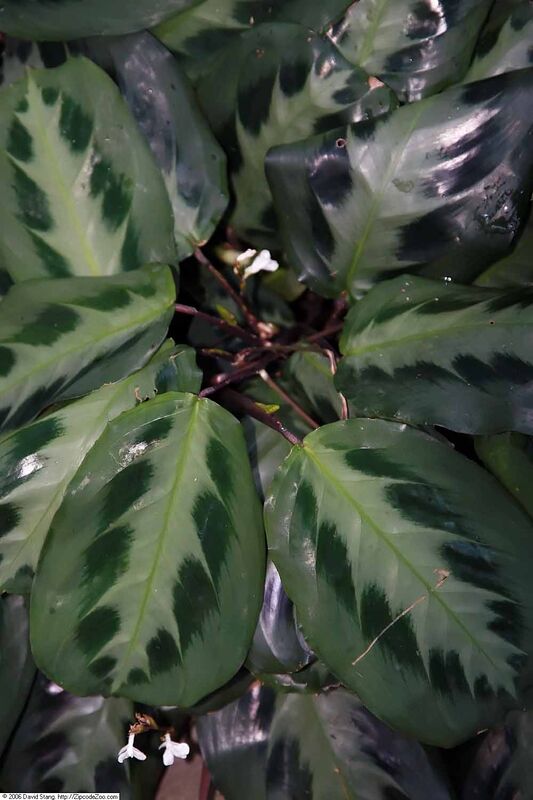
Maranta bicolor is a low-growing prayer plant with oval leaves that display a distinctive two-tone pattern: a medium green base with brown blotches along the midrib that shift to emerald green as the leaf matures, and a gray-green to purple-green underside. Like all prayer plants, it folds its leaves upright at night in the characteristic gesture that gives the whole group its common name. It is rarer in cultivation than its cousin Maranta leuconeura, which makes finding one feel like a small victory.
How to grow Maranta bicolor
bright indirect light (3-6 feet
Keep the soil consistently moist but never soggy.
40-60%
65-80 degrees F (18-27 degrees C).
Rich, well-draining mix with a
Division of rhizomes in spring
Brown leaf tips from fluoride
Fun Facts
The nightly leaf-folding movement (called nyctinasty) is driven by a specialized swollen area called the pulvinus, located where the leaf meets the stem -- it acts as a hydraulic hinge that responds to changes in light.
Pet safe
Non-toxic to cats, dogs, and humans. Confirmed safe by the ASPCA.
Sources
- Maranta (plant) - Wikipedia (opens in new tab)Reference
- Maranta (plant) - Wikipedia (opens in new tab)Reference
- Toxic and Non-toxic Plants: Maranta | ASPCA (opens in new tab)Reference
- Toxic and Non-toxic Plants: Maranta | ASPCA (opens in new tab)Reference
- Varieties Of Maranta - Learn About Different Prayer Plant Types | Gardening Know How (opens in new tab)Reference
- Varieties Of Maranta - Learn About Different Prayer Plant Types | Gardening Know How (opens in new tab)Reference