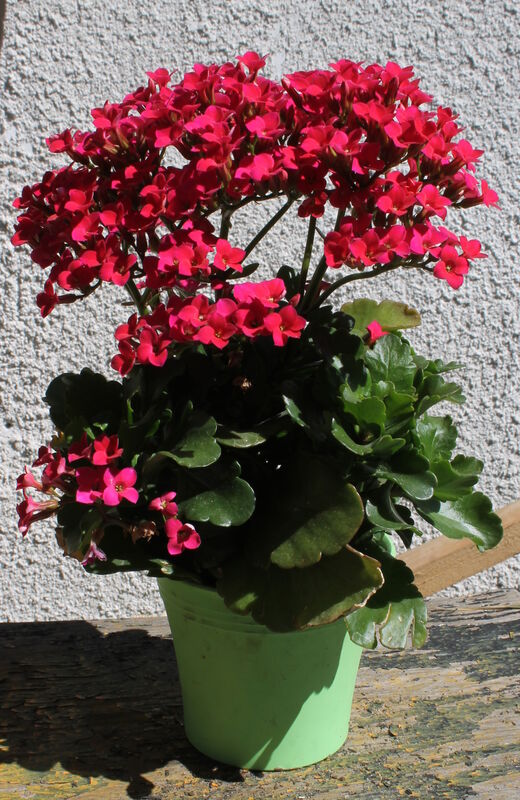
Christmas Kalanchoe
Kalanchoe blossfeldiana
Christmas Kalanchoe is one of the most popular flowering succulents on the planet, sold by the millions as holiday gifts for its cheerful clusters of small blooms in red, orange, yellow, pink, white, and salmon that last 8-12 weeks above waxy, scalloped foliage. You can get it to rebloom the following year by giving it a period of long dark nights in autumn -- treat it like a Christmas cactus and it will reward you with a second show.
How to grow Christmas Kalanchoe
bright indirect light (3-6 feet
Water only when the top
60-80%
65-75°F
30-50%
Stem cuttings are the easiest method.
Root rot from overwatering is
Fun Facts
Kalanchoe blossfeldiana is a short-day plant, meaning it needs long nights (12-14 hours of uninterrupted darkness) to trigger flower bud formation. Commercial growers use blackout curtains in greenhouses to force them into bloom for specific holidays -- which is exactly why they appear in shops like clockwork every November.
Toxic to pets
Toxic to dogs, cats, and other pets according to ASPCA. Contains bufadienolide cardiac glycosides that can cause vomiting, diarrhea, lethargy, and in severe cases abnormal heart rhythm. All parts are affected. Keep out of reach of pets and children. Contact ASPCA Animal Poison Control (888-426-4435) if ingested.
Sources
- Toxic and Non-toxic Plants: Kalanchoe -- ASPCA (opens in new tab)ASPCA
- Toxic and Non-toxic Plants: Kalanchoe -- ASPCA (opens in new tab)ASPCA
- Kalanchoe Blossfeldiana Care -- Botanical Gardening (opens in new tab)Botanical Garden
- Kalanchoe Blossfeldiana Care -- Botanical Gardening (opens in new tab)Reference
- Kalanchoe Blossfeldiana Care -- The Gardening Cook (opens in new tab)Reference
- Kalanchoe Blossfeldiana Care -- The Gardening Cook (opens in new tab)Reference
- Kalanchoe Plant Care Guide -- Healthy Houseplants (opens in new tab)Reference
- Kalanchoe Plant Care Guide -- Healthy Houseplants (opens in new tab)Reference