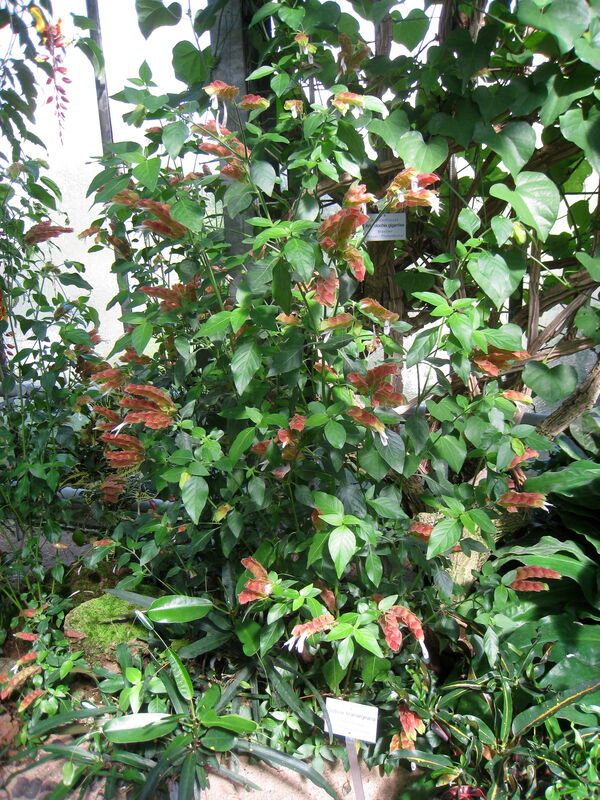
Shrimp Plant
Justicia brandegeana
The Shrimp Plant gets its name from the arching, overlapping bracts that genuinely do look like a cooked shrimp, cascading in copper-red, salmon, or yellow tones with small white tubular flowers poking out from the tips. You can keep it blooming nearly year-round with adequate light, and it is one of the better plants for attracting hummingbirds when placed outdoors in summer.
How to grow Shrimp Plant
bright indirect light (3-6 feet
Water when the top inch of soil is dry.
40-60%
60-75°F
Well-draining, loamy to sandy soil
Stem cuttings root easily in spring and summer.
Aphids, spider mites, and whiteflies are common.
Fun Facts
The species name brandegeana honors Townshend Stith Brandegee (1843-1925), an American botanist and civil engineer who spent decades documenting the flora of Baja California and Mexico, collecting thousands of specimens across rugged terrain. The genus Justicia, meanwhile, honors James Justice (1698-1763), a Scottish horticulturist who wrote some of the earliest English-language gardening texts.
Pet safe
Non-toxic to dogs, cats, and humans. Safe for households with children and pets.
Sources
- Justicia brandegeana Shrimp Plant -- Woodlanders Native Nursery (opens in new tab)Botanical Garden
- Shrimp Plant Care Guide -- Tropical Plants of Florida (opens in new tab)Botanical Garden
- Justicia brandegeana Shrimp Plant -- Woodlanders Native Nursery (opens in new tab)Reference
- Justicia brandegeeana -- Wikipedia (opens in new tab)Reference
- Justicia brandegeeana -- Wikipedia (opens in new tab)Reference
- Shrimp Plant Care Guide -- Tropical Plants of Florida (opens in new tab)Reference
- Shrimp Plant Care Tips -- Guide to Houseplants (opens in new tab)Reference
- Shrimp Plant Care Tips -- Guide to Houseplants (opens in new tab)Reference