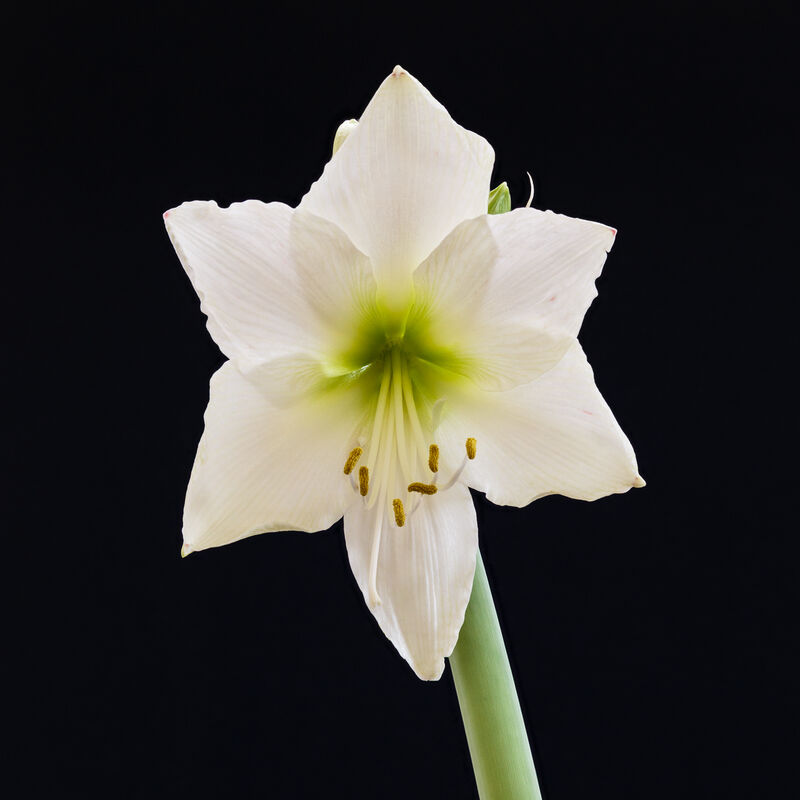
Amaryllis
Hippeastrum hybrids
Hippeastrum hybrids are the bulbs sold every holiday season as 'amaryllis,' producing dramatic trumpet-shaped flowers up to 10 inches across on thick stalks that seem to shoot up almost visibly fast once you start watering them. The name Hippeastrum means 'knight's star,' which is not an exaggeration when you see a well-grown bulb put up two or three simultaneous flower stalks. You can keep them blooming year after year by coaxing them through a dormancy period each fall, turning a holiday novelty into a long-term plant relationship.
How to grow Amaryllis
Bright light with some direct
Keep soil barely moist when
Not particularly demanding.
65-80°F
Well-draining potting mix high in organic matter.
Remove offset bulblets from the
Root rot from soggy soil
Fun Facts
The name 'amaryllis' technically belongs to a South African genus, not these South American plants. After decades of debate, the International Botanical Congress formally ruled in 1987 that the holiday bulb sold as 'amaryllis' should be called Hippeastrum, meaning 'knight's star.'
Toxic to pets
Toxic to cats and dogs. All parts of the plant contain lycorine and other alkaloids. Symptoms include drooling, vomiting, diarrhea, low blood pressure, and tremors. The bulb is the most toxic part. Confirmed toxic by ASPCA.
Sources
- Houseplant Care - Amaryllis (Hippeastrum) - New York Botanical Garden (opens in new tab)Botanical Garden
- Amaryllis Care - University of Maryland Extension (opens in new tab)Reference
- Amaryllis, Hippeastrum - University of Wisconsin Horticulture (opens in new tab)Reference
- Hippeastrum - Wikipedia (opens in new tab)Reference
- Hippeastrum - Wikipedia (opens in new tab)Reference
- Houseplant Care - Amaryllis (Hippeastrum) - New York Botanical Garden (opens in new tab)Reference
- Amaryllis Care - University of Maryland Extension (opens in new tab)University Extension
- Amaryllis, Hippeastrum - University of Wisconsin Horticulture (opens in new tab)University Extension