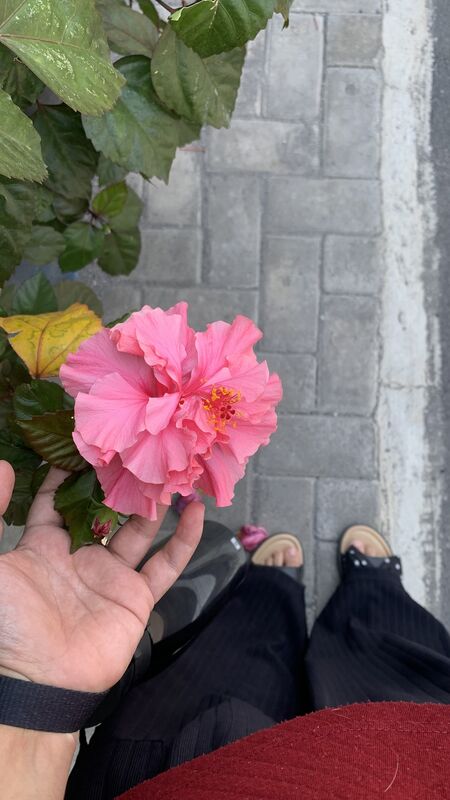
Chinese Hibiscus
Hibiscus rosa-sinensis
Hibiscus rosa-sinensis is the tropical hibiscus of hotel lobbies, poolside gardens, and sunny windowsills everywhere, producing spectacular trumpet-shaped flowers up to 10 inches across in shades ranging from deep crimson to soft peach to neon yellow. Despite the name 'Chinese' hibiscus, it has never been found growing wild anywhere and appears to be an ancient Polynesian-created hybrid. You get prolific blooms from a sun-hungry plant that rewards good light and regular feeding with near-continuous color.
How to grow Chinese Hibiscus
Needs as much sun as you can give it.
water thoroughly (water until it
Enjoys higher humidity as a
65-85°F
Rich, well-draining potting mix with a pH of 6.
Stem cuttings taken in late
Aphids, spider mites, whiteflies, and
Fun Facts
A 2024 molecular study confirmed that Hibiscus rosa-sinensis is a hybrid created by Polynesian people from two species native more than 4,000 km apart (Hibiscus cooperi from Vanuatu and H. kaute from French Polynesia), and the plant has never been found growing wild anywhere on Earth.
Pet safe
Non-toxic to cats, dogs, and humans according to ASPCA. Considered pet-friendly.
Sources
- Care of Hibiscus rosa-sinensis - Smithsonian Gardens (opens in new tab)Botanical Garden
- Care of Hibiscus rosa-sinensis - Smithsonian Gardens (opens in new tab)Reference
- Hibiscus rosa-sinensis - NC State Extension Gardener Plant Toolbox (opens in new tab)Reference
- Hibiscus rosa-sinensis - RHS Growing Guide (opens in new tab)Reference
- Hibiscus rosa-sinensis - Wikipedia (opens in new tab)Reference
- Hibiscus rosa-sinensis - Wikipedia (opens in new tab)Reference
- Hibiscus rosa-sinensis - RHS Growing Guide (opens in new tab)Royal Horticultural Society
- Hibiscus rosa-sinensis - NC State Extension Gardener Plant Toolbox (opens in new tab)University Extension