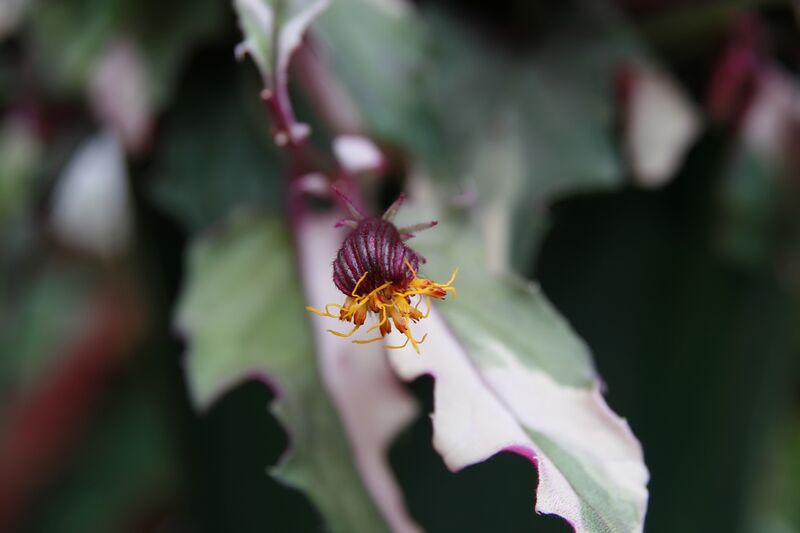
Purple Passion or gynura sarmentosa
Gynura aurantiaca
Gynura aurantiaca is grown almost entirely for its foliage: dark green, coarsely toothed, oval leaves densely covered in soft reddish-purple hairs that give the entire plant a vivid velvety sheen from almost any angle. It starts out growing upright but gradually sprawls and trails as it matures, making it an excellent candidate for a hanging basket. The orange-yellow flowers that occasionally appear in fall and winter have an unpleasant smell, so most growers pinch them off — no shame in that.
How to grow Purple Passion or gynura sarmentosa
bright indirect light (3-6 feet
Water when the top inch of soil feels dry.
60-80%
60-75°F
20%
Stem cuttings root very easily
Common pests include aphids, mealybugs,
Fun Facts
Every part of the purple coloration on Gynura aurantiaca comes from dense purple hairs called trichomes on the leaf surfaces — the underlying leaf tissue is plain dark green. The hairs contain anthocyanins, the same pigments responsible for the colors of blueberries and red cabbage.
Pet safe
Listed as non-toxic to cats and dogs by the ASPCA. Generally considered safe for humans and pets, though ingestion is not recommended and may cause mild stomach upset. Some sources advise caution given individual sensitivities.
Sources
- Gynura aurantiaca - Wikipedia (opens in new tab)Reference
- Gynura aurantiaca - Wikipedia (opens in new tab)Reference
- Gynura aurantiaca | NC State Extension Gardener Plant Toolbox (opens in new tab)Reference
- Purple Passion - Gynura Aurantiaca | UK Houseplants (opens in new tab)Reference
- Purple Passion - Gynura Aurantiaca | UK Houseplants (opens in new tab)Reference
- Purple Passion Plant 101: How to Care for Velvet Plants | Bloomscape (opens in new tab)Reference
- Purple Passion Plant 101: How to Care for Velvet Plants | Bloomscape (opens in new tab)Reference
- Purple Passion Plant Care: How to Grow Gynura Aurantiaca Indoors (opens in new tab)Reference
- Purple Passion Plant Care: How to Grow Gynura Aurantiaca Indoors (opens in new tab)Reference
- Gynura aurantiaca | NC State Extension Gardener Plant Toolbox (opens in new tab)University Extension