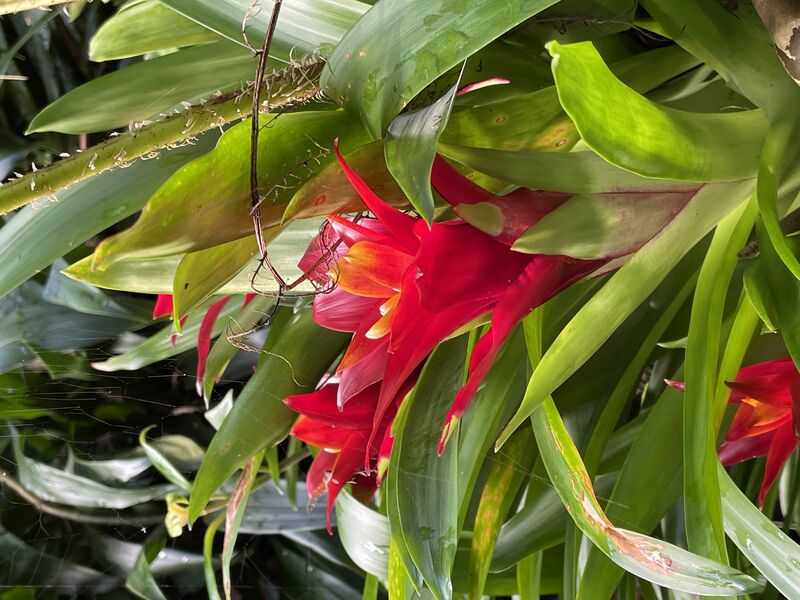
Scarlet Star
Guzmania lingulata
Guzmania lingulata forms a basal rosette of leathery strap-shaped green leaves with a central 'vase' that holds water, topped by a spectacular burst of scarlet, orange, or yellow bracts surrounding small white flowers that can persist for two to four months. What looks like a flower is actually modified leaves — the real flowers are small, white, and fairly unremarkable by comparison. After blooming the parent plant declines, but it produces offset pups that carry on the show.
How to grow Scarlet Star
Part to full shade; tolerates
Water by keeping the central
60-80%
65-90°F
Orchid or bromeliad potting mix
After the parent plant blooms
Watch for scale insects along
Fun Facts
The genus Guzmania was named after Anastasio Guzman, an 18th-century Spanish pharmacist and naturalist — so this plant is named after a pharmacist, which feels fitting given how many bromeliad compounds have since been investigated for medicinal properties.
Pet safe
Non-toxic to cats, dogs, and horses per ASPCA records. A pet-safe choice, though ingestion of any plant material in large amounts may cause mild stomach upset.
Sources
- Bromeliad Scarlet Star Plant - Guzmania Lingulata Care Guide (opens in new tab)Reference
- Bromeliad Scarlet Star Plant - Guzmania Lingulata Care Guide (opens in new tab)Reference
- Guzmania Bromeliad Care & Growing Guide (opens in new tab)Reference
- Guzmania Bromeliad Care & Growing Guide (opens in new tab)Reference
- Guzmania Lingulata 'Scarlet Star' Plant Care (opens in new tab)Reference
- Guzmania Lingulata 'Scarlet Star' Plant Care (opens in new tab)Reference
- Guzmania lingulata (Scarlet Star) | NC State Extension Gardener (opens in new tab)Reference
- Guzmania lingulata (Scarlet Star) | NC State Extension Gardener (opens in new tab)University Extension