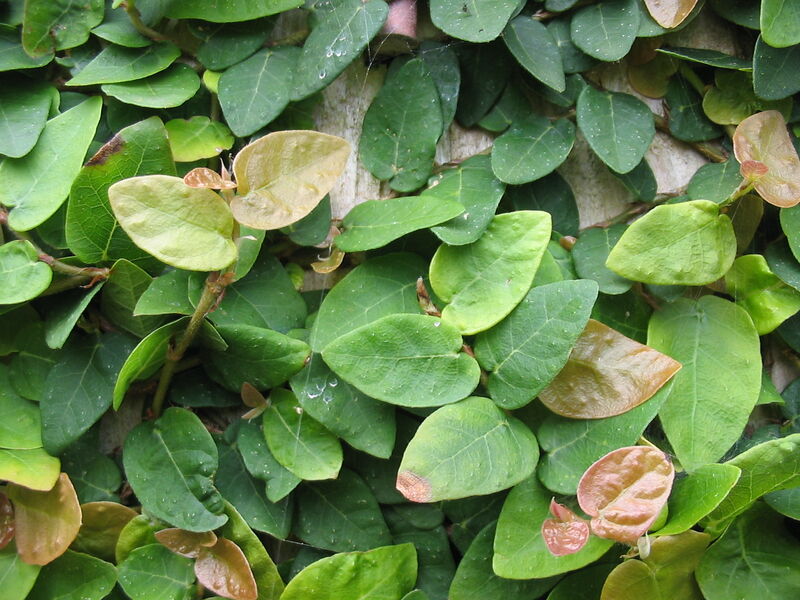
Dwarf Creeping Fig
Ficus pumila
Dwarf Creeping Fig is a vigorous evergreen vine that attaches to surfaces via tiny adhesive root discs — give it a wall, a trellis, or a moss pole and it will cover it entirely. Young plants have small, heart-shaped, slightly puckered leaves with a delicate texture; as vines mature they develop larger, leathery adult foliage. It's a popular choice for terrariums (it loves humidity and stays compact there) and for covering walls in warm-climate gardens.
How to grow Dwarf Creeping Fig
bright indirect light (3-6 feet
Keep soil lightly moist spring through fall.
60-80%
55-75°F
Moist, well-drained mix high in organic matter.
Stem cuttings root readily.
Scale, aphids, mealybugs, thrips, and
Fun Facts
A variety of creeping fig (Ficus pumila var. awkeotsang) produces a gel from its seeds that is the source of aiyu jelly — a popular dessert in Taiwan served chilled with honey and lemon juice. The jelly is named after a merchant's daughter who reportedly discovered how to make it in the 1800s.
Toxic to pets
Toxic to cats and dogs (GI irritation if ingested). The milky white sap can cause phytophotodermatitis - a skin reaction triggered by sun exposure after contact. Listed in the FDA Database of Poisonous Plants.
Sources
- Creeping Fig Houseplant - New York Botanical Garden Research Guides (opens in new tab)Botanical Garden
- Creeping Fig Houseplant — New York Botanical Garden Research Guides (opens in new tab)Reference
- Ficus pumila - Wikipedia (opens in new tab)Reference
- Ficus pumila — NC State Extension Gardener Plant Toolbox (opens in new tab)Reference
- Ficus pumila — Wikipedia (opens in new tab)Reference
- Ficus pumila - NC State Extension Gardener Plant Toolbox (opens in new tab)University Extension