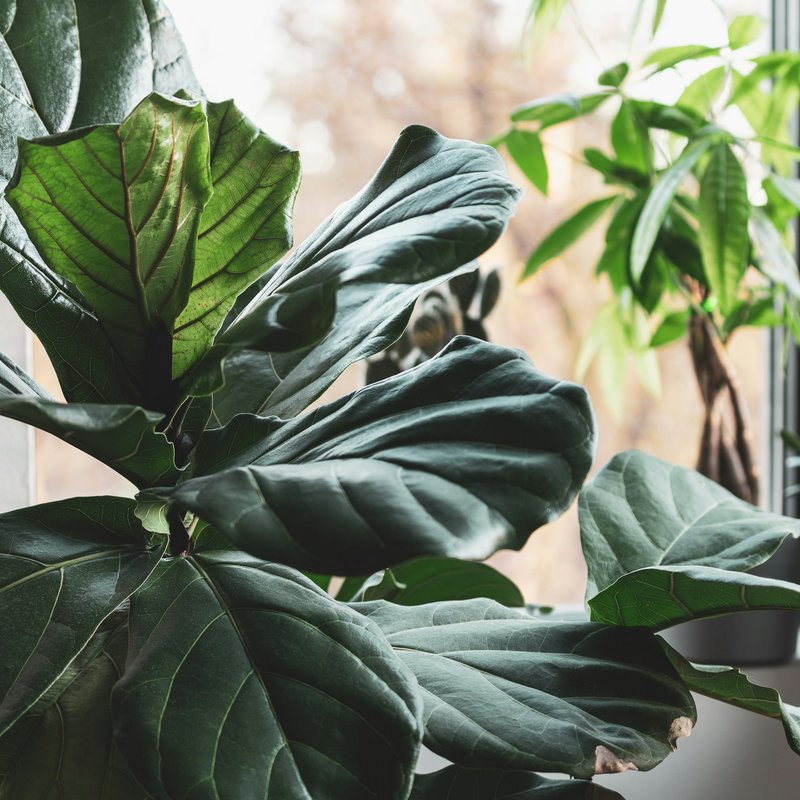
Fiddle Leaf Fig
Ficus lyrata
Pick a spot, put it there, and don't move it. Rewards stability with fast vertical growth and those big, gorgeous leaves. Move it and it will punish you.
Buy This Plant - $28.00How to grow Fiddle Leaf Fig
Bright Indirect
Check the top 2 inches of soil.
40%
65-80°F
Well-draining mix with some substance
Snip a stem cutting with
Dropping leaves for no reason?
Fun Facts
In the wild in West Africa, fiddle leaf figs start life as hemi-epiphytes. Seeds land in the tree canopy, germinate up there, and send roots all the way down to the ground. Sometimes the roots strangle the host tree on the way down. Nature is metal.
The name 'lyrata' means lyre-shaped, referring to the leaf. A lyre is basically a small harp. And a fiddle is a violin. So the common name is just a different musical translation of the Latin name!
This plant calibrates itself to the exact light, temperature, and humidity of its spot. Move it across the room and it drops leaves like it's filing a grievance. Find a good spot and treat it like furniture. It's the most dramatic roommate you'll ever have.
Toxic to pets
Toxic to cats and dogs. The sap has calcium oxalate crystals plus ficin, a protein-dissolving enzyme that can irritate skin on contact and cause stomach problems if eaten.