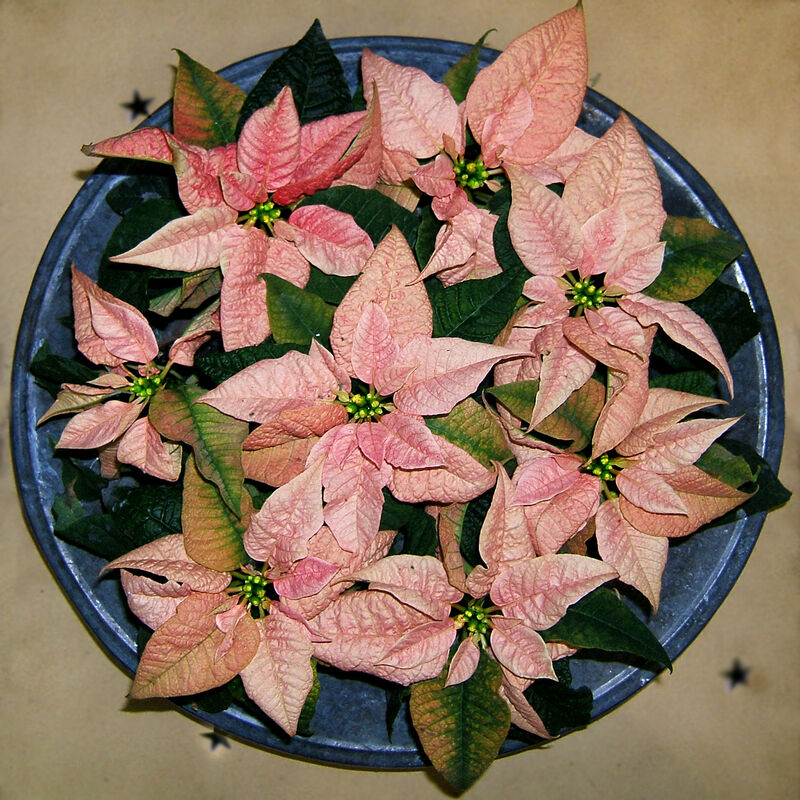
Poinsettia
Euphorbia pulcherrima
Poinsettia is a woody shrub that in its native Mexico grows up to 15 feet tall — a far cry from the cheerful little pot it ships in every December. Those blazing red 'petals' are actually colored bracts (modified leaves), with the true flowers being the tiny yellow structures at the center called cyathia. It is by far the world's most commercially important potted plant, with around 70 million sold in the US alone during a six-week holiday window.
How to grow Poinsettia
bright indirect light (3-6 feet
Water when the top inch
40-60%
65-70°F
Well-draining potting mix, ideally a
Stem cuttings taken in summer.
Root rot from overwatering, fungus
Fun Facts
The Aztecs called this plant cuetlaxochitl and used its red bracts to make textile dyes and to treat fevers with the milky sap — centuries before it became a Christmas decoration.
Toxic to pets
Toxic to dogs, cats, and horses per the ASPCA. Toxic principle is irritant sap (diterpenoid euphorbol esters). Clinical signs are mild: mouth and stomach irritation, occasional vomiting. Toxicity is widely over-reported - it is not the deadly plant urban legend claims, but keep it away from pets and children anyway.
Sources
- Euphorbia pulcherrima — NC State Extension Gardener Plant Toolbox (opens in new tab)Reference
- History of Poinsettia — University of Illinois Extension (opens in new tab)Reference
- History, Facts, and Care of Poinsettias — NDSU Extension (opens in new tab)Reference
- Poinsettia - ASPCA Toxic and Non-Toxic Plants (opens in new tab)Reference
- Poinsettia — ASPCA Toxic and Non-Toxic Plants (opens in new tab)Reference
- Euphorbia pulcherrima - NC State Extension Gardener Plant Toolbox (opens in new tab)University Extension
- History of Poinsettia - University of Illinois Extension (opens in new tab)University Extension
- History, Facts, and Care of Poinsettias - NDSU Extension (opens in new tab)University Extension