Crown-of-Thorns
Euphorbia milii
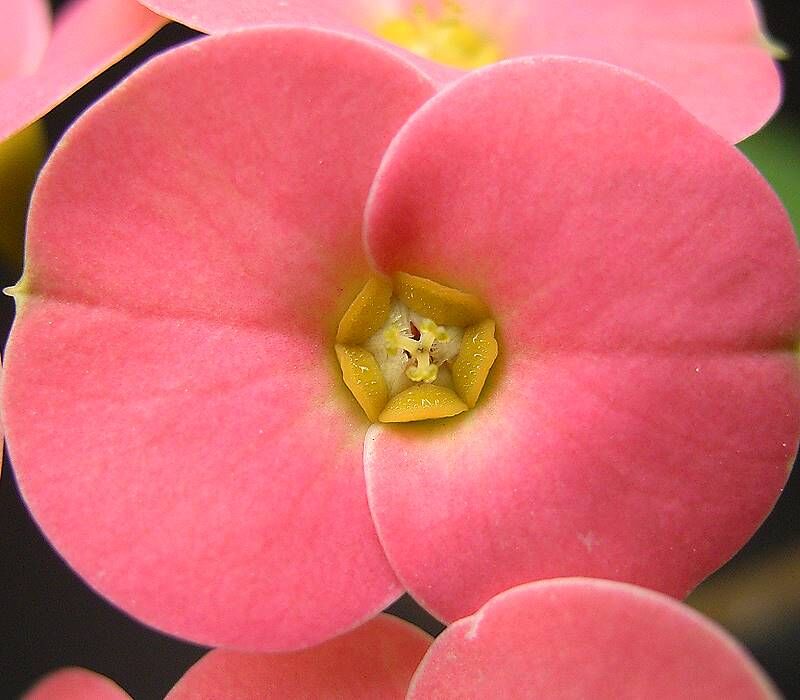
Crown-of-Thorns is a spiny, multi-stemmed succulent shrub covered in sharp black spines up to half an inch long, with bright green leaves and colorful bracts that make it look like it's flowering year-round. Indoors it stays compact at under two feet, while outdoor plants in tropical climates can push six feet. What you think are petals are actually modified leaves called bracts surrounding tiny, cup-shaped flowers — a signature Euphorbia trick.
How to grow Crown-of-Thorns
full sun (6 or more
Allow soil to dry out
Prefers low humidity.
65-90°F
Fast-draining cactus or succulent mix.
Stem tip cuttings.
Root rot from overwatering, spider
Fun Facts
The colorful 'flowers' are not flowers at all — they are bracts (modified leaves) surrounding tiny cup-shaped blooms called cyathia, a defining trait of all Euphorbias.
Toxic to pets
Toxic to cats, dogs, horses, and humans. The milky white latex sap causes contact dermatitis and can temporarily damage the cornea on eye contact. Ingestion causes mouth blistering and GI irritation. All plant parts are affected. ASPCA lists it as toxic to dogs, cats, and horses.
Sources
- Crown of Thorns Guide - Our House Plants (opens in new tab)Reference
- Crown of Thorns Guide — Our House Plants (opens in new tab)Reference
- Crown of Thorns Plant Care - Smart Garden Guide (opens in new tab)Reference
- Crown of Thorns Plant Care — Smart Garden Guide (opens in new tab)Reference
- Euphorbia milii — NC State Extension Gardener Plant Toolbox (opens in new tab)Reference
- Euphorbia milii - NC State Extension Gardener Plant Toolbox (opens in new tab)University Extension