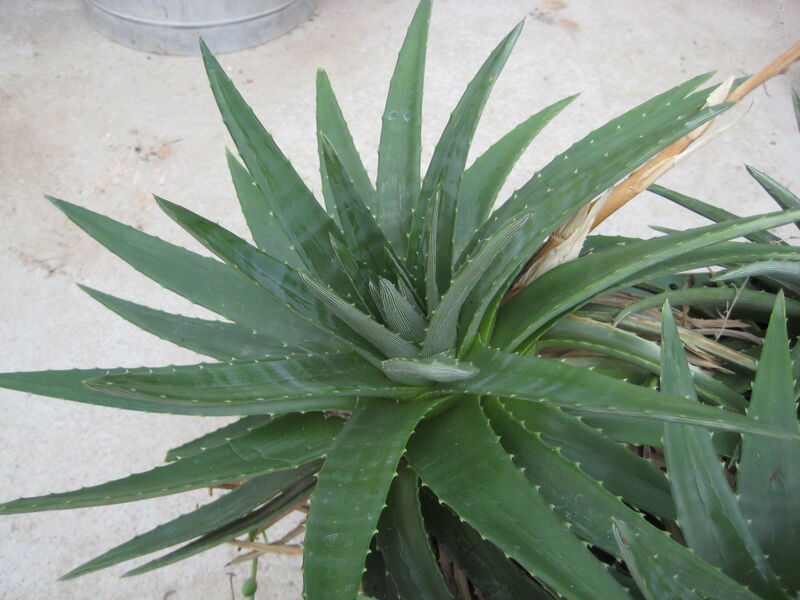
Miniature Agave
Dyckia brevifolia
Dyckia brevifolia is a terrestrial bromeliad that looks nothing like the bromeliads in the tropical flower section — it grows as a tight, spiny rosette of short, serrated leaves that genuinely passes for a miniature agave, which explains the common name. It's a sun-loving, drought-tolerant plant built for exposed rocky riverbanks in southern Brazil, which means it's about as tough as houseplants get as long as you give it full sun and excellent drainage. Handle with care — those marginal teeth are sharp.
How to grow Miniature Agave
50%
water thoroughly (water until it
Tolerates low humidity well.
Thrives up to 90°F (32°C).
Very well-draining medium is essential.
Produces offsets (pups) around the
Overwatering during winter is the
Fun Facts
Dyckia brevifolia is a rheophyte — a plant adapted to live in fast-moving water. Its populations grow exclusively on rocky riverbanks of the Itajaí-Açu River and can be completely submerged during floods for weeks at a time, then bounce back.
Toxic to pets
No documented chemical toxicity to humans or pets. The physical spines along leaf margins are a handling hazard and can draw blood easily - use leather gloves when repotting or dividing.
Sources
- Dyckia Bromeliad Care | Gardening Know How (opens in new tab)Reference
- Dyckia Bromeliad Care | Gardening Know How (opens in new tab)Reference
- Dyckia brevifolia (Sawblade) | World of Succulents (opens in new tab)Reference
- Dyckia brevifolia (Sawblade) | World of Succulents (opens in new tab)Reference
- Dyckia: A Prickly Pitcairnioideae | Bromeliads.info (opens in new tab)Reference
- Dyckia: A Prickly Pitcairnioideae | Bromeliads.info (opens in new tab)Reference
- Learn How to Grow Dyckia Bromeliads | Gardener's Path (opens in new tab)Reference
- Learn How to Grow Dyckia Bromeliads | Gardener's Path (opens in new tab)Reference
- Mating System and Genetic Structure Across All Known Populations of Dyckia brevifolia | PubMed / Journal of Heredity (opens in new tab)Reference
- Mating System and Genetic Structure Across All Known Populations of Dyckia brevifolia | PubMed / Journal of Heredity (opens in new tab)Peer-Reviewed