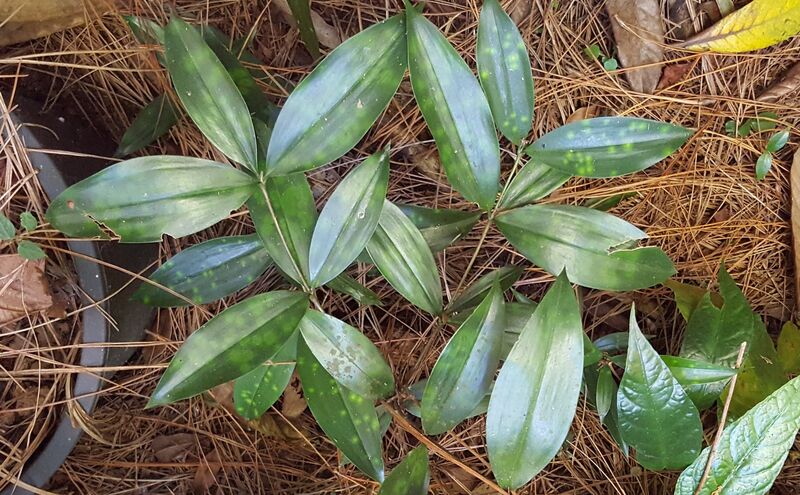
Gold Dust Dracaena
Dracaena surculosa
Gold Dust Dracaena is the odd one out in the dracaena family — instead of the typical sword-leaf rosette on a thick cane, it grows as a bushy multi-stemmed shrub with slender, whip-like branches and oval leaves covered in irregular cream and yellow speckles that look like someone flicked a paintbrush at them. It's slow-growing and compact, making it an ideal choice when you want tropical drama without the height. The speckle intensity actually increases in brighter light, so position matters.
How to grow Gold Dust Dracaena
bright indirect light (3-6 feet
Keep soil moist during the
Tolerates normal room humidity but
65-70°F
Peat-free, loam-based potting compost with
Stem tip cuttings in spring or summer.
Root rot from overwatering or
Fun Facts
The species epithet surculosa is Latin for 'branching,' referring to its distinctly shrubby, multi-stemmed growth habit — a direct contrast to the single-cane forms most people associate with dracaenas.
Toxic to pets
Toxic to dogs, cats, and horses. Contains saponins throughout the plant, including flowers and berries. Ingestion causes vomiting, drooling, loss of appetite, weakness, and incoordination. Contact ASPCA Poison Control at (888) 426-4435 if a pet ingests this plant.
Sources
- Dracaena surculosa | RHS Plant Directory (opens in new tab)Botanical Garden
- Dracaena surculosa | RHS Plant Directory (opens in new tab)Botanical Garden
- Dracaena Surculosa - Tips for Growing Dracaena Gold Dust Plant (opens in new tab)Reference
- Dracaena Surculosa - Tips for Growing Dracaena Gold Dust Plant (opens in new tab)Reference
- Dracaena surculosa | Wikipedia (opens in new tab)Reference
- Dracaena surculosa | Wikipedia (opens in new tab)Reference
- How to grow indoor Dracaena Surculosa (Japanese Bamboo / Gold Dust) | UK Houseplants (opens in new tab)Reference
- How to grow indoor Dracaena Surculosa (Japanese Bamboo / Gold Dust) | UK Houseplants (opens in new tab)Reference
- Dracaena surculosa | NC State Extension Gardener Plant Toolbox (opens in new tab)University Extension
- Dracaena surculosa | NC State Extension Gardener Plant Toolbox (opens in new tab)University Extension