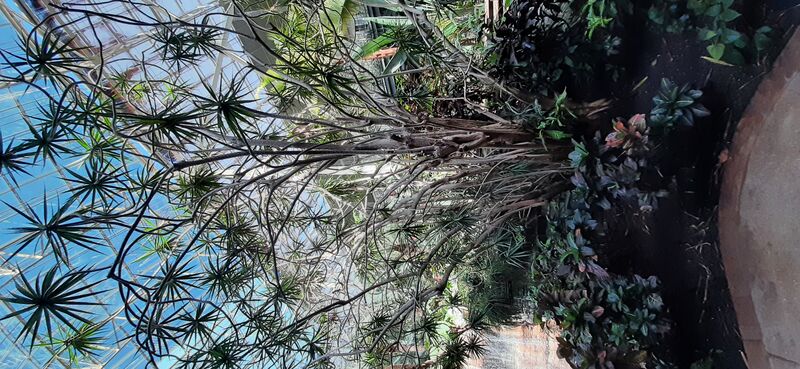
Marginata
Dracaena marginata
Dracaena marginata is the architectural houseplant that looks like it belongs in a design magazine — thin, red-edged green leaves fan out from multiple branching canes that twist and bend over time into genuinely sculptural forms. It's one of the most drought-tolerant dracaenas, handling irregular watering without drama. Give it a bright spot, water it when the soil dries halfway down, and it will grow into a striking indoor tree that earns compliments for years.
How to grow Marginata
Medium to bright indirect light
Water when the top half
Prefers higher humidity as a
65-80°F
Well-draining indoor potting mix.
Stem tip or cane cuttings.
Root rot from overwatering.
Fun Facts
The name Dracaena comes from the Greek word for 'female dragon' — the red sap that oozes from cut stems dries into a resin that genuinely resembles dragon's blood, and has historically been used as a varnish and dye.
Toxic to pets
Toxic to dogs, cats, and horses per ASPCA. Contains saponins. Symptoms include vomiting (sometimes with blood), depression, loss of appetite, excessive drooling, and dilated pupils in cats. Contact ASPCA Poison Control at (888) 426-4435 if a pet ingests this plant.
Sources
- Dracaena marginata (Dragon Tree) | Gardenia (opens in new tab)Reference
- Dracaena marginata (Dragon Tree) | Gardenia (opens in new tab)Reference
- How to Plant, Grow, and Care for Dracaena Marginata | Epic Gardening (opens in new tab)Reference
- How to Plant, Grow, and Care for Dracaena Marginata | Epic Gardening (opens in new tab)Reference
- Is Dracaena Toxic To Pets | Gardening Know How (opens in new tab)Reference
- Is Dracaena Toxic To Pets | Gardening Know How (opens in new tab)Reference
- Madagascar Dragon Tree | ASPCA Toxic and Non-Toxic Plants (opens in new tab)Reference
- Madagascar Dragon Tree | ASPCA Toxic and Non-Toxic Plants (opens in new tab)Reference
- Red-Marginated Dracaena | ASPCA Toxic and Non-Toxic Plants (opens in new tab)Reference
- Red-Marginated Dracaena | ASPCA Toxic and Non-Toxic Plants (opens in new tab)Reference