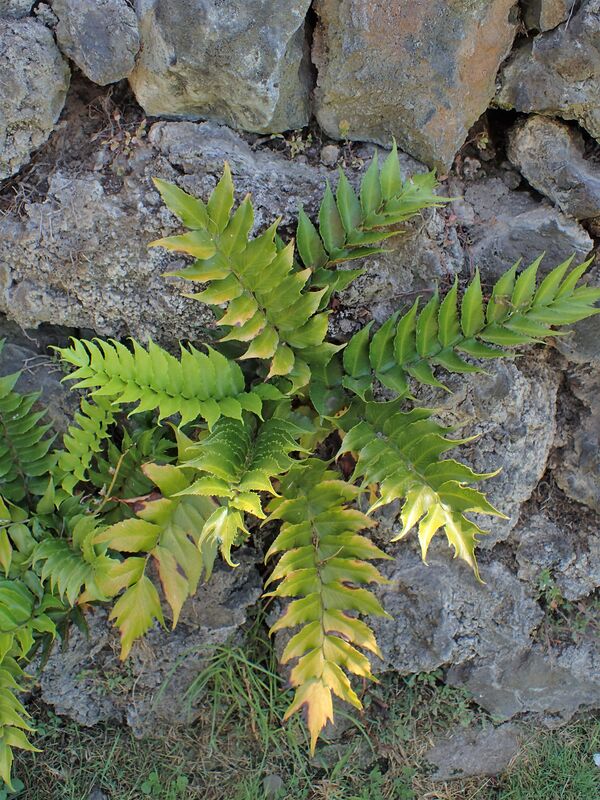
House Holly Fern
Cyrtomium falcatum
Cyrtomium falcatum is a fern that behaves more like a well-adjusted houseplant than most ferns dare to — it tolerates lower humidity, lower light, and occasional dry spells without the dramatic collapse that makes other ferns so nerve-wracking to own. Its arching fronds carry dark, glossy, holly-like leaflets with sickle-shaped tips (falcatum means 'sickle-shaped' in Latin), making it one of the most handsome foliage plants for a shaded indoor spot or a protected outdoor corner.
How to grow House Holly Fern
Medium to bright indirect light
Keep soil consistently moist in
50-55%
18-27°C
Humus-rich, moist, well-draining mix.
Division of rhizomes in spring
Scale insects are the primary
Fun Facts
Cyrtomium falcatum has escaped cultivation and naturalized on multiple continents — the first recorded naturalization in the USA was in New Jersey in 1907, and it has since been documented in Hawaii, Australia, New Zealand, southern Africa, and several European countries, where it can displace native plants including rare bryophytes.
Pet safe
Non-toxic to cats, dogs, and horses per the ASPCA. One of the safer ferns to have around pets and children.
Sources
- Cyrtomium falcatum - Missouri Botanical Garden Plant Finder (opens in new tab)Botanical Garden
- Holly Fern (Cyrtomium falcatum) - Gardenia.net (opens in new tab)Botanical Garden
- Cyrtomium falcatum — Missouri Botanical Garden Plant Finder (opens in new tab)Reference
- Cyrtomium falcatum — NC State Extension Gardener Plant Toolbox (opens in new tab)Reference
- Holly Fern (Cyrtomium falcatum) — Gardenia.net (opens in new tab)Reference
- Japanese Holly Fern Care Tips: Grow Cyrtomium falcatum Indoors (opens in new tab)Reference
- Japanese Holly Fern Care Tips: Grow Cyrtomium falcatum Indoors (opens in new tab)Reference
- Cyrtomium falcatum - NC State Extension Gardener Plant Toolbox (opens in new tab)University Extension