Zebra Plant
Cryptanthus zonatus
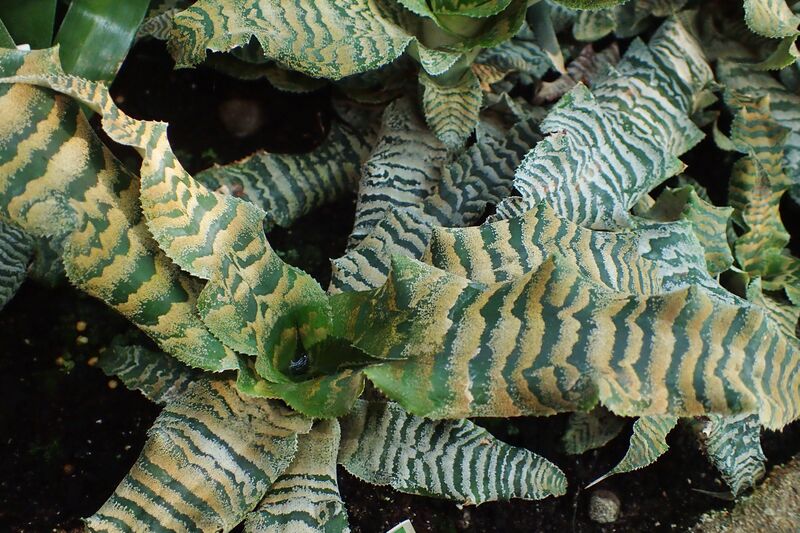
Cryptanthus zonatus grows as a low, spreading rosette of broad, wavy-edged leaves in deep burgundy or olive-brown crossed by bold silver or grey horizontal bands that honestly do look like zebra stripes — hence every common name it has ever been given. It stays compact and ground-hugging, rarely exceeding 20–30 cm across, and its color and pattern variation between cultivars (green with silver bands, red-brown with silver bands) keeps collectors coming back for more.
How to grow Zebra Plant
bright indirect light (3-6 feet
Terrestrial bromeliad - water into
50-70%
18-26°C
Well-draining, slightly acidic mix.
By pups produced before or after flowering.
Mealybugs and scale are the most common pests.
Fun Facts
The species name zonatus is Latin for 'banded' or 'zoned' — a direct reference to the horizontal cross-banding on the leaves, making this one of those pleasingly honest botanical names where the epithet describes exactly what you're looking at.
Pet safe
Non-toxic to cats and dogs per ASPCA. Safe for homes with pets.
Sources
- Cryptanthus zonatus - RHS Plant Detail (opens in new tab)Botanical Garden
- Cryptanthus Earth Star Bromeliad Care - Houseplant Central (opens in new tab)Reference
- Cryptanthus Earth Star Bromeliad Care — Houseplant Central (opens in new tab)Reference
- Cryptanthus Zonatus Bromeliad Plant - Bromeliads.info (opens in new tab)Reference
- Cryptanthus Zonatus Bromeliad Plant — Bromeliads.info (opens in new tab)Reference
- Cryptanthus zonatus — RHS Plant Detail (opens in new tab)Reference
- Earth Star - ASPCA Non-Toxic Plant Listing (opens in new tab)Reference
- Earth Star — ASPCA Non-Toxic Plant Listing (opens in new tab)Reference