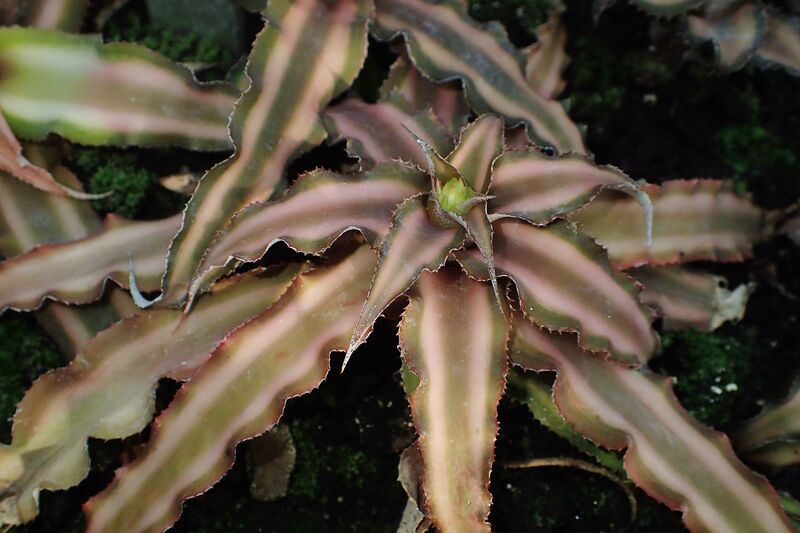
Dwarf Rose Stripe Star
Cryptanthus bivittatus
Cryptanthus bivittatus forms a flat, star-shaped rosette of lanceolate, serrated leaves that hug the ground rather than reaching upward like most bromeliads, which is exactly why the genus earned the nickname 'earth stars'. The leaves come in vibrant combinations of pink, red, cream, and green with ivory or silver striping, making this primarily a foliage plant — the white flowers that eventually appear are small and easily overlooked compared to the color show happening all year long.
How to grow Dwarf Rose Stripe Star
bright indirect light (3-6 feet
Unlike most bromeliads, earth stars
50-80%
50-80°F
Well-draining, humus-rich, slightly acidic mix
By offsets (pups) produced after flowering.
Scale insects (soft and hard-shelled)
Fun Facts
The genus name Cryptanthus means 'hidden flower' in Greek — a reference to the fact that the small white flowers are practically buried inside the rosette, easily missed unless you look closely.
Pet safe
Non-toxic to cats and dogs per the ASPCA (listed under 'Earth Star'). Safe for households with pets.
Sources
- Earth Star Bromeliad (Cryptanthus bivittatus) - Gardenia.net (opens in new tab)Botanical Garden
- Cryptanthus Earth Star Bromeliad Care - Houseplant Central (opens in new tab)Reference
- Cryptanthus Earth Star Bromeliad Care — Houseplant Central (opens in new tab)Reference
- Cryptanthus bivittatus — NC State Extension Gardener Plant Toolbox (opens in new tab)Reference
- Earth Star - ASPCA Non-Toxic Plant Listing (opens in new tab)Reference
- Earth Star Bromeliad (Cryptanthus bivittatus) — Gardenia.net (opens in new tab)Reference
- Earth Star — ASPCA Non-Toxic Plant Listing (opens in new tab)Reference
- Cryptanthus bivittatus - NC State Extension Gardener Plant Toolbox (opens in new tab)University Extension