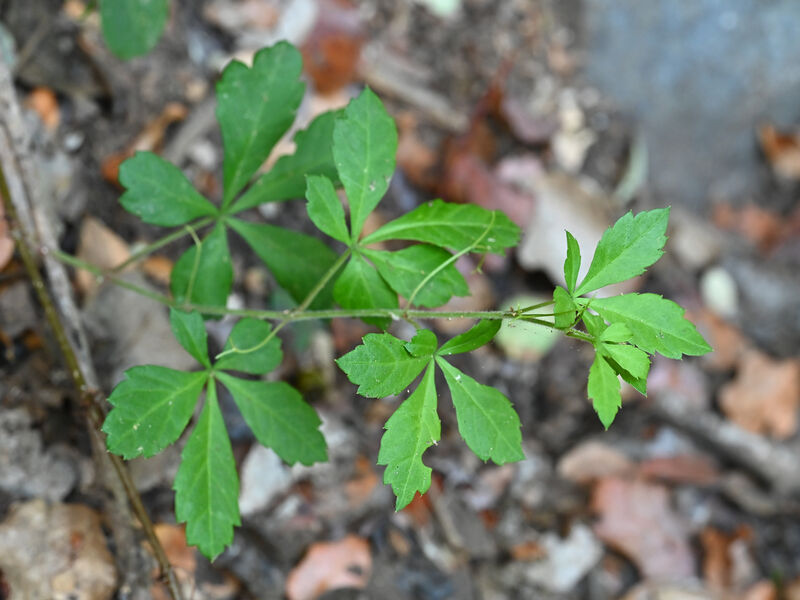
Miniature Grape Ivy
Cissus striata
Miniature grape ivy earns its name with small, five-lobed compound leaves that are a scaled-down echo of the Virginia creeper, giving it a delicate, intricate texture that looks more impressive than its modest dimensions suggest. It is a vigorous climber and trailer that can cover ground fast indoors, and its surprisingly cold hardiness — surviving outdoor temperatures down to -9°C — makes it unusually versatile for a tropical-looking vine. Give it something to climb and it will happily put on a show all year.
How to grow Miniature Grape Ivy
bright indirect light (3-6 feet
Allow the top inch of
40-60%
16-27°C
Well-draining mix with plenty of organic matter.
Stem tip cuttings in late
Root rot from overwatering is the primary risk.
Fun Facts
Cissus striata is the only member of the Vitaceae family native to Chile — a notable distinction for a family best known for the wine grape — and it was introduced to cultivation in Europe around 1878 by Kew collector Tweedie, who described it climbing bushes covered in red berries in winter.
Toxic to pets
Not known to be toxic to humans or pets. Generally considered safe. Note that the small black berries produced outdoors are inedible and should not be eaten.
Sources
- Cissus striata | Ivy of Uruguay | RHS Gardening (opens in new tab)Botanical Garden
- Cissus striata | Ivy of Uruguay | RHS Gardening (opens in new tab)Botanical Garden
- Cissus striata | Trees and Shrubs Online (opens in new tab)Botanical Garden
- Cissus striata | Trees and Shrubs Online (opens in new tab)Botanical Garden
- Cissus striata - Wikipedia (opens in new tab)Reference
- Cissus striata — Wikipedia (opens in new tab)Reference
- How to Grow and Care for Cissus Striata | Plant Care Today (opens in new tab)Reference
- How to Grow and Care for Cissus Striata | Plant Care Today (opens in new tab)Reference
- How to Grow and Care for Miniature Grape Ivy | PictureThis (opens in new tab)Reference
- How to Grow and Care for Miniature Grape Ivy | PictureThis (opens in new tab)Reference