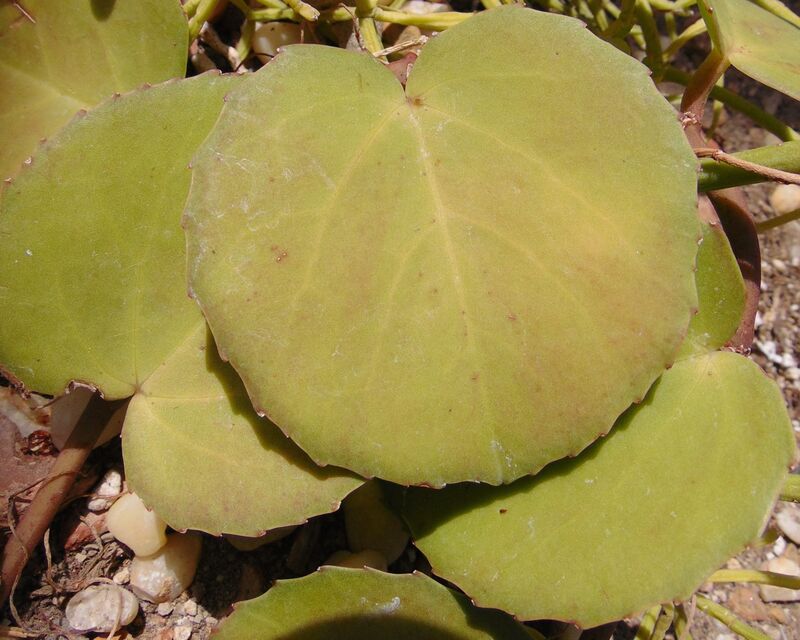
Wax Cissus
Cissus rotundifolia
Wax cissus stands out from most Cissus species because of its distinctly succulent character — the thick, waxy, round leaves store moisture in a way that gives the plant real drought tolerance and a satisfyingly glossy appearance. It climbs readily with tendrils and works equally well trailing from a shelf or basket. This is a plant with roots in a genuinely harsh environment, and that toughness translates to an unusually forgiving houseplant that can handle the kind of benign neglect most of us occasionally inflict.
How to grow Wax Cissus
bright indirect light (3-6 feet
water thoroughly (water until it
Tolerates normal household humidity well.
16-24°C
Well-draining loamy mix with added
Stem cuttings with at least two nodes.
Root rot from overwatering is the main hazard.
Fun Facts
The leaves of Cissus rotundifolia are eaten as a vegetable by rural communities in East Africa and Yemen during food scarcity. Nutritional analysis confirms the leaves contain meaningful amounts of protein, dietary fiber, and essential vitamins including thiamin, riboflavin, and folic acid.
Toxic to pets
Not known to be toxic to humans or pets. Generally considered pet-friendly, though the usual caution about keeping plants away from persistent chewers applies.
Sources
- Cissus rotundifolia (Arabian Wax Leaf) | Top Tropicals Plant Encyclopedia (opens in new tab)Botanical Garden
- Cissus rotundifolia (Arabian Wax Leaf) | Top Tropicals Plant Encyclopedia (opens in new tab)Botanical Garden
- Cissus rotundifolia | Plants of the World Online | Kew Science (opens in new tab)Botanical Garden
- Cissus rotundifolia | Plants of the World Online | Kew Science (opens in new tab)Botanical Garden
- How to Grow Cissus rotundifolia | EarthOne (opens in new tab)Reference
- How to Grow Cissus rotundifolia | EarthOne (opens in new tab)Reference
- Proximate composition and functional properties of Arabian Wax Cissus leaves | PMC (opens in new tab)Reference
- Ultimate Cheatsheet for Indoor Cissus | UK Houseplants (opens in new tab)Reference
- Ultimate Cheatsheet for Indoor Cissus | UK Houseplants (opens in new tab)Reference
- Proximate composition and functional properties of Arabian Wax Cissus leaves | PMC (opens in new tab)Peer-Reviewed