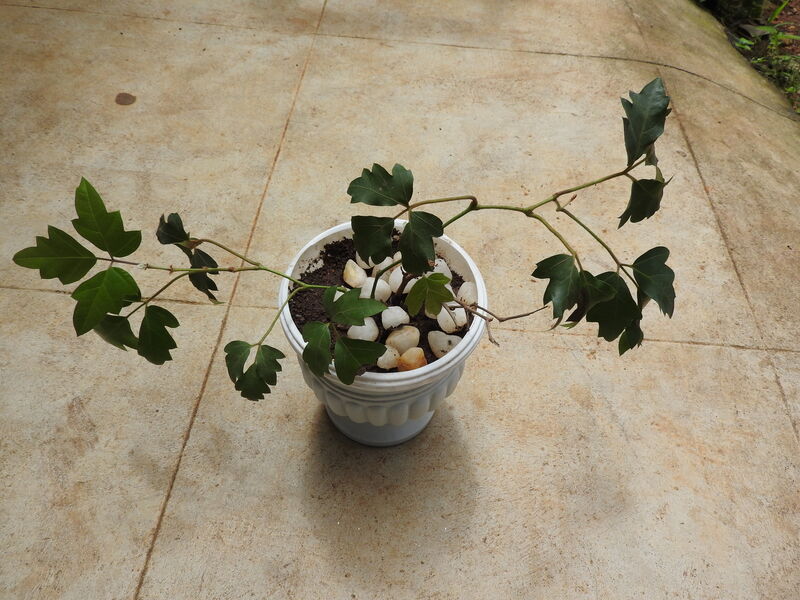
Grape Leaf Ivy
Cissus rhombifolia
Grape leaf ivy has been a staple of American homes since the late 1940s, and its staying power is entirely earned — it is one of the most tolerant houseplants around, coping with sun or shade, warm or cool air, and moist or drier soil with minimal drama. The compound leaves with their three diamond-shaped leaflets genuinely do look like a small grape leaf, and the vining stems can reach 3 meters indoors when happy. Give it a hanging basket or a place to trail off a shelf and it will reward you with dense, lush greenery year-round.
How to grow Grape Leaf Ivy
bright indirect light (3-6 feet
Keep soil consistently moist but not soggy.
40-60%
16-27°C
Well-draining mix rich in organic matter, pH 5.
Easy from stem cuttings.
Powdery mildew in poor air circulation.
Fun Facts
Cissus rhombifolia is not actually an ivy at all — it belongs to the Vitaceae (grape) family and is more closely related to the grapevines on a winery wall than to true ivy. The name stuck because the leaves look vaguely similar.
Pet safe
Non-toxic to cats, dogs, and horses according to the ASPCA. The sap may cause mild skin irritation in sensitive individuals, but the plant is generally considered safe for pet-friendly households.
Sources
- Grape Ivy Plant Care Guide | Healthy Houseplants (opens in new tab)Reference
- Grape Ivy Plant Care Guide | Healthy Houseplants (opens in new tab)Reference
- Grape Ivy Plant Care | Guide to Houseplants (opens in new tab)Reference
- Grape Ivy Plant Care | Guide to Houseplants (opens in new tab)Reference
- Grape Ivy Plant: How to Grow and Care for Cissus Rhombifolia | Plant Care Today (opens in new tab)Reference
- Grape Ivy Plant: How to Grow and Care for Cissus Rhombifolia | Plant Care Today (opens in new tab)Reference
- Grape Ivy | ASPCA Toxic and Non-Toxic Plants (opens in new tab)Reference
- Grape Ivy | ASPCA Toxic and Non-Toxic Plants (opens in new tab)Reference
- Cissus alata (Grape Ivy, Grape Leaf Ivy) | NC State Extension Gardener Plant Toolbox (opens in new tab)University Extension
- Cissus alata (Grape Ivy, Grape Leaf Ivy) | NC State Extension Gardener Plant Toolbox (opens in new tab)University Extension