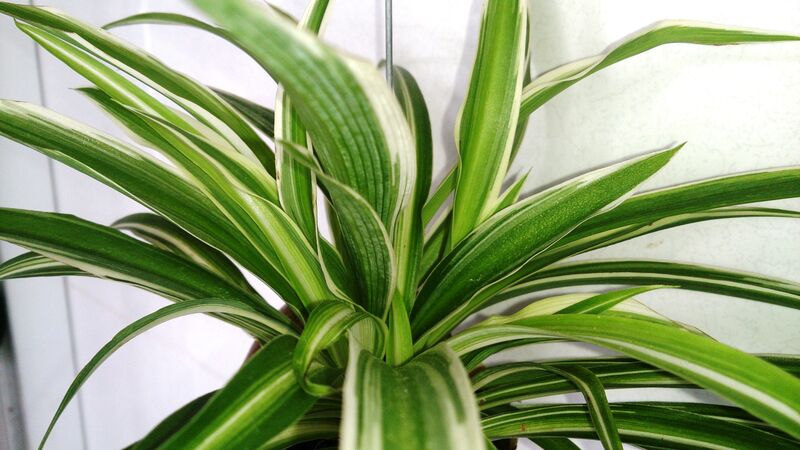
Variegated Spider Plant
Chlorophytum comosum
The spider plant is one of the most forgiving houseplants you can own — it tolerates irregular watering, a wide range of light levels, and general neglect with cheerful stoicism. The 'Variegatum' cultivar has broad green leaves with crisp white margins, and once it gets comfortable it throws out cascading stems tipped with miniature plantlets that look exactly like a spider dangling from a web. Those thick, fleshy roots are an evolutionary adaptation for surviving drought, so your plant will absolutely outlast your busiest stretch at work.
How to grow Variegated Spider Plant
Medium to bright indirect light
water thoroughly (water until it
50%
18-24°C
Well-draining, slightly acidic potting mix (pH 6.
Extremely easy from the spiderettes
Brown leaf tips are the
Fun Facts
NASA included the spider plant in its 1989 Clean Air Study and found it removes formaldehyde, xylene, benzene, and carbon monoxide from indoor air — removing up to 95% of toxic agents in a sealed chamber over 24 hours.
Pet safe
Non-toxic to cats and dogs according to the ASPCA. The entire plant is considered safe, though excessive consumption can cause mild gastrointestinal upset in pets.
Sources
- How to Care for a Spider Plant | Houseplant Central (opens in new tab)Reference
- How to Care for a Spider Plant | Houseplant Central (opens in new tab)Reference
- Spider Plant | ASPCA Toxic and Non-Toxic Plants (opens in new tab)Reference
- Spider Plant | ASPCA Toxic and Non-Toxic Plants (opens in new tab)Reference
- Chlorophytum comosum 'Variegatum' | NC State Extension Gardener Plant Toolbox (opens in new tab)University Extension
- Chlorophytum comosum 'Variegatum' | NC State Extension Gardener Plant Toolbox (opens in new tab)University Extension
- Spider Plant, Chlorophytum comosum - Wisconsin Horticulture Extension (opens in new tab)University Extension
- Spider Plant, Chlorophytum comosum — Wisconsin Horticulture Extension (opens in new tab)University Extension