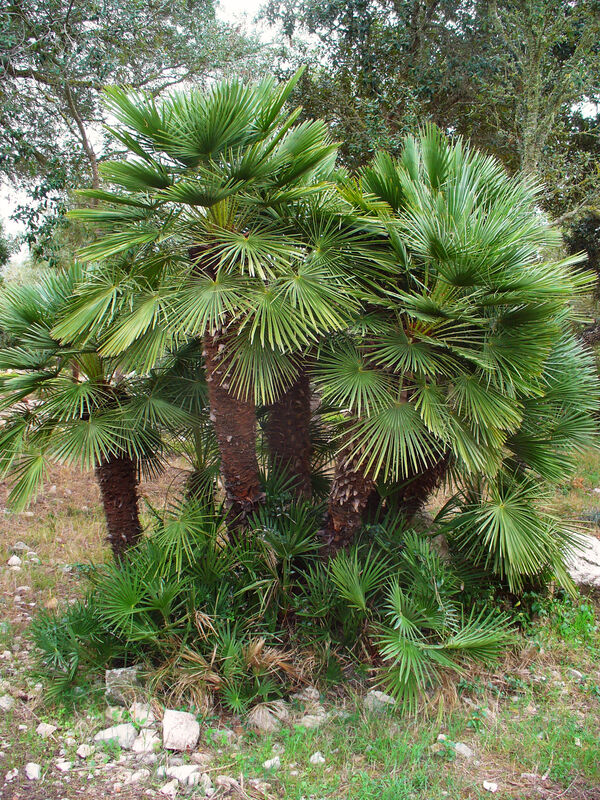
European Fan Palm
Chamaerops humilis
Chamaerops humilis holds the rare distinction of being one of only two palm species native to continental Europe, making it a genuinely ancient component of the Mediterranean landscape rather than a tropical import. You grow it for its stiff, fan-shaped fronds in dusty green to silvery blue-green, and it repays you with exceptional cold-hardiness — surviving down to 10°F (-12°C) — and a laid-back attitude toward drought and neglect once established. The main thing to watch is the sharp spines along the leaf stalks, which are not decorative; wear gloves any time you work near this plant.
How to grow European Fan Palm
Bright indirect to full sun
Keep the soil consistently moist
40-60%
60-80°F
Adaptable to a wide range
By division of the basal
Root rot from poor drainage
Fun Facts
Chamaerops humilis is one of the northernmost naturally occurring palms in the world, with the northernmost native specimens growing in Genoa, Italy, at 44 degrees north latitude — about the same latitude as Portland, Oregon.
Pet safe
Non-toxic to cats, dogs, and horses. The young leaf buds are edible in its native range. The only real hazard is physical: the sharp petiole spines cause painful puncture wounds.
Sources
- Chamaerops humilis European Fan Palm - Gardenia.net (opens in new tab)Botanical Garden
- Chamaerops - Wikipedia (opens in new tab)Reference
- Chamaerops humilis European Fan Palm — Gardenia.net (opens in new tab)Reference
- Chamaerops — Wikipedia (opens in new tab)Reference
- Chamaerops humilis - NC State Extension Gardener Plant Toolbox (opens in new tab)University Extension
- Chamaerops humilis — NC State Extension Gardener Plant Toolbox (opens in new tab)University Extension