Rosary Vine
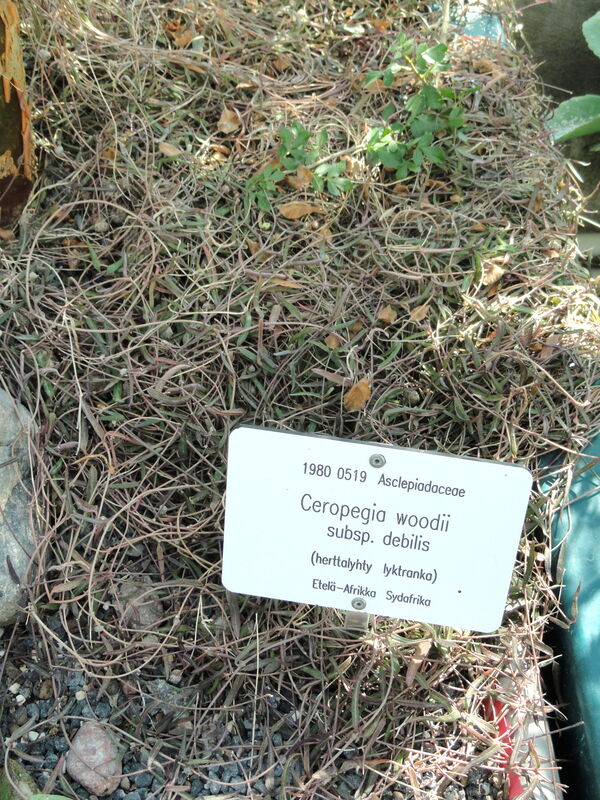
Ceropegia woodii
Ceropegia woodii trails long, threadlike purple stems strung with small heart-shaped leaves that are dark green marbled with silver on top and purple underneath — it looks delicate but is surprisingly forgiving for a semi-succulent that can go a week or two without water. You hang it in a bright spot, water it sparingly, and watch the vines spill down in a curtain that gets more dramatic the longer you own it. The bead-like tubers that form along the stems are its backup water storage system and a ready source for new plants.
How to grow Rosary Vine
bright indirect light (3-6 feet
Allow the soil to dry
40-50%
64-79°F
Well-draining succulent or cactus mix.
Several easy methods: stem cuttings
Spider mites are the main
Fun Facts
The species was named woodii in honor of John Medley Wood (1827-1915), an English-born South African botanist and curator of the Durban Botanic Garden, who collected the specimens on which the 1894 species description was based.
Pet safe
Non-toxic to cats, dogs, and humans. Safe for pet-friendly homes. Note: do not confuse with the 'rosary pea' (Abrus precatorius), which is one of the most toxic plants in existence.
Sources
- Ceropegia linearis subsp. woodii - South African National Biodiversity Institute (SANBI) (opens in new tab)Botanical Garden
- Ceropegia linearis subsp. woodii — South African National Biodiversity Institute (SANBI) (opens in new tab)Botanical Garden
- String of Hearts (Ceropegia woodii) - OurHouseplants (opens in new tab)Reference
- String of Hearts (Ceropegia woodii) — OurHouseplants (opens in new tab)Reference
- Ceropegia woodii - NC State Extension Gardener Plant Toolbox (opens in new tab)University Extension
- Ceropegia woodii — NC State Extension Gardener Plant Toolbox (opens in new tab)University Extension