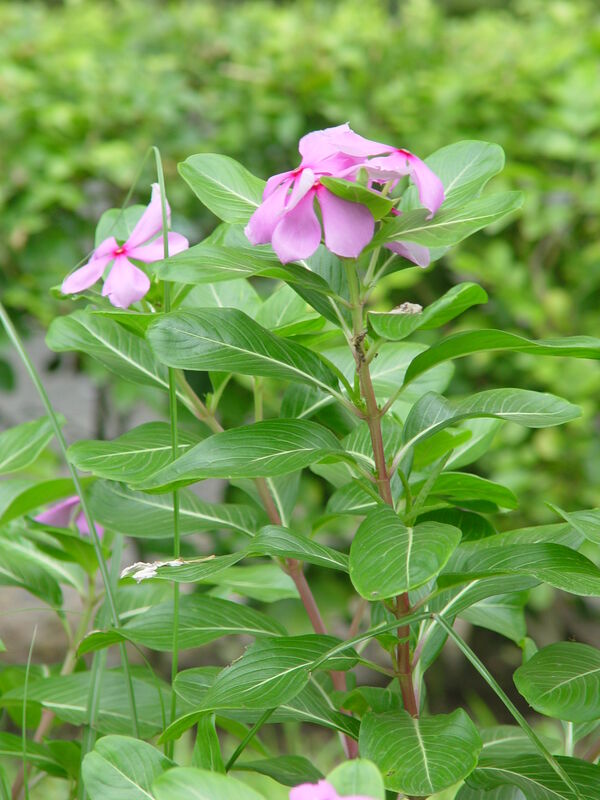
Madagascar Periwinkle
Catharanthus roseus
Catharanthus roseus is one of those plants living a double life — as a cheerful, heat-loving garden annual producing pinwheel flowers in white, pink, red, and lavender, and as a source of some of medicine's most important cancer-fighting compounds. You'll find it blooming reliably through summer heat that wilts most other flowers, making it a reliable performer in hot, sunny beds and containers. Despite its friendly face, every part of this plant is toxic, so keep it away from children, cats, dogs, and horses.
How to grow Madagascar Periwinkle
full sun (6 or more
Prefers to dry out slightly between waterings.
Tolerates average to low humidity well.
60-90°F
well-draining soil (equal parts potting
70-75°F
Aphids can appear on undersides
Fun Facts
Vincristine and vinblastine, isolated from Catharanthus roseus in the 1950s while researchers were screening the plant for anti-diabetic compounds, became two of the first chemotherapy drugs used to treat leukemia and Hodgkin's lymphoma — a landmark accidental discovery in cancer medicine.
Toxic to pets
Highly toxic to humans, cats, dogs, and horses. All parts of the plant contain vinca alkaloids (including vinblastine and vincristine), which can cause serious symptoms including vomiting, seizures, low blood pressure, and in large doses, death. Not a plant for homes with curious pets or young children.
Sources
- Madagascar Periwinkle - Royal Botanic Gardens Kew (opens in new tab)Botanical Garden
- Madagascar Periwinkle — Royal Botanic Gardens Kew (opens in new tab)Botanical Garden
- Ornamental Exterior vs. Therapeutic Interior of Madagascar Periwinkle — PMC (opens in new tab)Reference
- Ornamental Exterior vs. Therapeutic Interior of Madagascar Periwinkle - PMC (opens in new tab)Peer-Reviewed
- Catharanthus roseus - NC State Extension Gardener Plant Toolbox (opens in new tab)University Extension
- Catharanthus roseus — NC State Extension Gardener Plant Toolbox (opens in new tab)University Extension