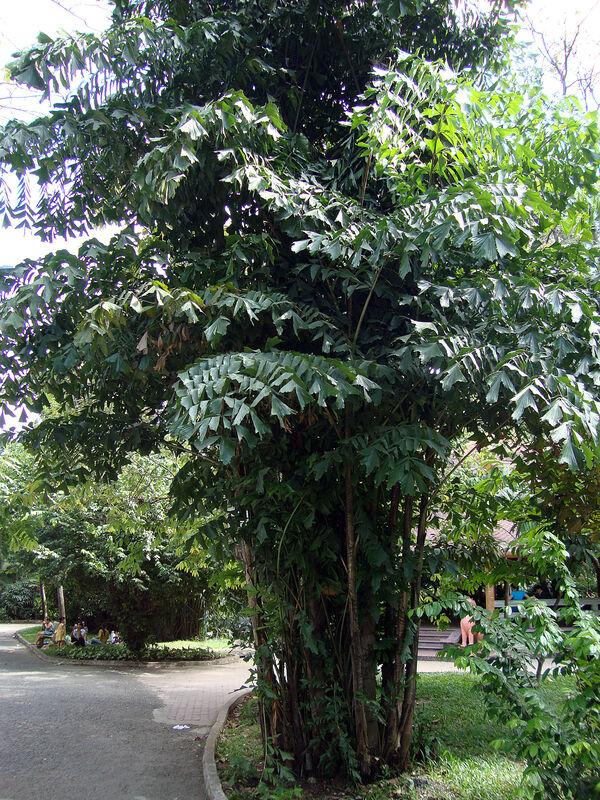
Fishtail Palm
Caryota mitis
Caryota mitis is the palm that makes people stop and stare: its leaflets are jagged, fishtail-shaped wedges that look like they were cut with pinking shears, giving the whole plant a wildly textured, almost prehistoric silhouette. You get a multi-stemmed clumping palm that can hit 20-25 feet outdoors, though indoors it stays more manageable while still commanding attention. Keep it warm, humid, and away from anything cold and drafty and it will reward you with one of the most dramatic canopies in the palm family.
How to grow Fishtail Palm
bright indirect light (3-6 feet
Water when the top 2-3 inches of soil feel dry.
60-80%
61-79°F
Rich, well-draining potting mix.
Division of basal suckers (offsets)
Spider mites and mealybugs are common pests.
Fun Facts
Caryota palms are the only palms in the world with bipinnate (doubly compound) leaves — every other palm has either simple or singly compound fronds, making the fishtail shape a genuinely unique botanical feature.
Toxic to pets
The fruit (berries) are toxic to humans and animals due to calcium oxalate crystals and oxalic acid. Contact with crushed or broken fruit can cause severe skin irritation and chemical burns. The IVIS guide classifies the fruits as a notable hazard. Foliage is considered mildly unpleasant if ingested.
Sources
- Caryota mitis Fishtail Palm - Gardenia.net (opens in new tab)Botanical Garden
- Caryota Species: Fishtail Palm - IVIS Guide to Poisonous Plants (opens in new tab)Reference
- Caryota Species: Fishtail Palm — IVIS Guide to Poisonous Plants (opens in new tab)Reference
- Caryota mitis Fishtail Palm — Gardenia.net (opens in new tab)Reference
- Caryota mitis - NC State Extension Gardener Plant Toolbox (opens in new tab)University Extension
- Caryota mitis — NC State Extension Gardener Plant Toolbox (opens in new tab)University Extension