Striped Inch Plant
Callisia elegans
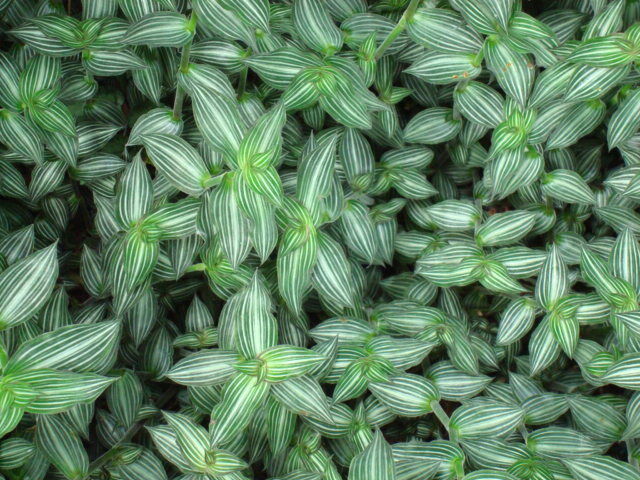
Callisia elegans is a low, trailing perennial with dark green leaves striped in silvery parallel lines and a rich purple underside — it looks hand-painted but asks very little from you in return. Your main job is keeping it in bright indirect light and out of direct sun so those stripes stay bold and don't fade to a dull green. It's a relative of Tradescantia and shares that family's easy-going, fast-growing nature.
How to grow Striped Inch Plant
bright indirect light (3-6 feet
Keep the soil moderately moist
Average household humidity is fine.
60-80°F
Well-draining potting mix.
Stem cuttings root easily and quickly.
Overwatering causes root rot.
Fun Facts
The genus name Callisia derives from the Greek word kallos, meaning 'beauty' — a fitting name for a plant whose silver-striped leaves look like something a botanical illustrator would draw.
Toxic to pets
Mildly toxic to cats, dogs, and horses. The main concern is dermatitis - skin irritation from contact with the plant's compounds. Ingestion may cause mild gastrointestinal upset. The ASPCA lists the closely related inch plant as toxic due to dermatitis risk.
Sources
- Callisia gentlei var. elegans - Plants of the World Online, Kew Science (opens in new tab)Botanical Garden
- Callisia gentlei var. elegans — Plants of the World Online, Kew Science (opens in new tab)Botanical Garden
- Inch Plant Toxicity - ASPCA Animal Poison Control (opens in new tab)Reference
- Inch Plant Toxicity — ASPCA Animal Poison Control (opens in new tab)Reference
- Striped Inch Plant Care - PlantIn (opens in new tab)Reference
- Striped Inch Plant Care — PlantIn (opens in new tab)Reference