Peacock Plant
Calathea makoyana
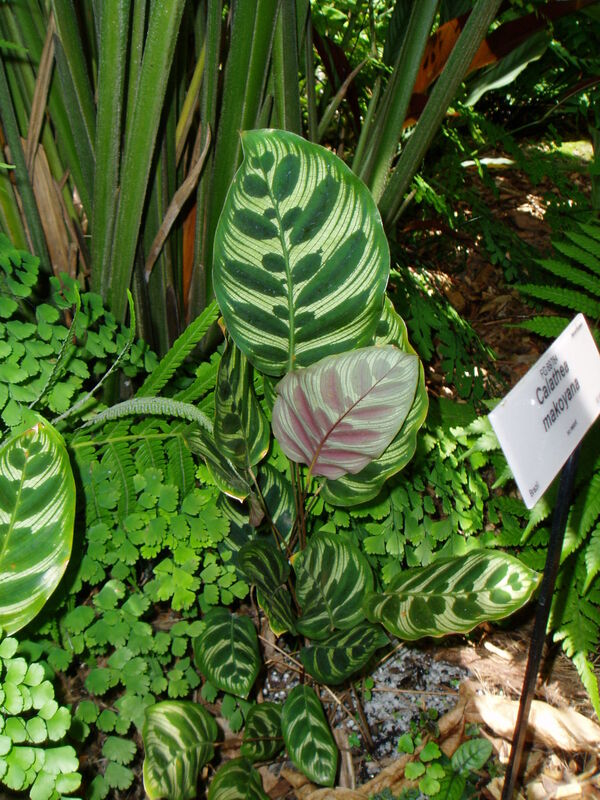
Calathea makoyana is named 'Peacock Plant' for the oval leaves that look like someone stenciled peacock feather markings in light and dark green on the upper surface, with a rich purple underside that shows through as a dark outline. The effect is genuinely striking, which is why this plant has been a fixture in tropical houseplant collections for decades. Like all prayer plants, it folds its leaves upward each evening in a movement called nyctinasty, and opens them again each morning in a slow, elegant ritual that never gets old.
How to grow Peacock Plant
bright indirect light (3-6 feet
Keep soil semi-moist but never soggy.
60-80%
65-85°F
Well-draining, organically rich, slightly acidic
Divide at the rhizome when repotting in spring.
Brown leaf edges or tips
Fun Facts
Calathea makoyana is native specifically to the Brazilian state of Espirito Santo, a remarkably small native range for a plant that has become a globally popular houseplant found in homes on every continent.
Pet safe
Non-toxic to cats and dogs (ASPCA confirmed for Calathea genus). Completely safe for pets and children.
Sources
- A Simple Guide to Growing Calathea Makoyana (Peacock Plant) | Garden Betty (opens in new tab)Reference
- A Simple Guide to Growing Calathea Makoyana (Peacock Plant) | Garden Betty (opens in new tab)Reference
- Calathea Makoyana (Calathea Peacock Plant): Care and Growing Guide | Leafy Place (opens in new tab)Reference
- Calathea Makoyana (Calathea Peacock Plant): Care and Growing Guide | Leafy Place (opens in new tab)Reference
- Peacock Plant (Calathea makoyana): Care and Growing Guide | Gardenia (opens in new tab)Reference
- Peacock Plant (Calathea makoyana): Care and Growing Guide | Gardenia (opens in new tab)Reference
- Peacock Plant Care - How To Care For Calathea Makoyana | Smart Garden Guide (opens in new tab)Reference
- Peacock Plant Care - How To Care For Calathea Makoyana | Smart Garden Guide (opens in new tab)Reference
- Toxic and Non-toxic Plants: Calathea | ASPCA (opens in new tab)Reference
- Toxic and Non-toxic Plants: Calathea | ASPCA (opens in new tab)Reference