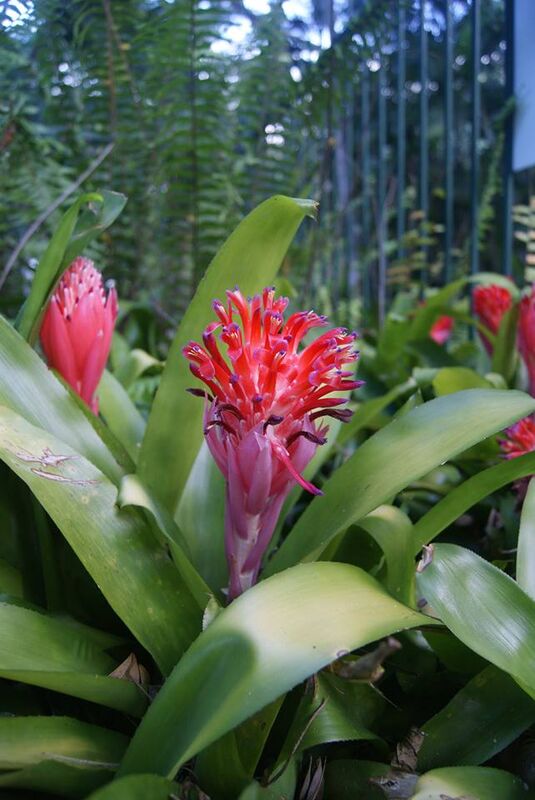
Urn Plant
Billbergia pyramidalis
Billbergia pyramidalis earns the nickname 'Foolproof Plant' honestly: it is one of the most resilient bromeliads around, tolerating more neglect, shade, and soil variation than most tropical plants would forgive. When it does bloom, it delivers a striking upright spike of bright red-pink flowers with blue-tipped petals sitting inside vivid pink bracts, looking like a lit torch. The whole show lasts about a month and is worth every bit of the wait.
How to grow Urn Plant
Tolerates a wide range from
Keep the central cup (urn)
60-80%
70-75°F
Well-draining bromeliad or epiphyte mix.
Divide offsets (pups) from the
Mosquitoes and scale can breed
Fun Facts
Nearly all Billbergia pyramidalis plants in a collection will bloom simultaneously in late summer or early autumn, putting on a synchronized floral display that is striking in a large group.
Pet safe
Non-toxic to cats and dogs. Bromeliads are considered safe for pets by the ASPCA. As with any plant, ingestion can cause mild digestive upset in animals.
Sources
- Billbergia pyramidalis - Wikipedia (opens in new tab)Botanical Garden
- Flaming Torch Bromeliad - Port St. Lucie Botanical Gardens (opens in new tab)Botanical Garden
- Billbergia Care And Propagation Guide | Houseplant Alley (opens in new tab)Reference
- Billbergia Care And Propagation Guide | Houseplant Alley (opens in new tab)Reference
- Billbergia pyramidalis - Wikipedia (opens in new tab)Reference
- Billbergia: Inside and Out - Bromeliad Plant Care (opens in new tab)Reference
- Billbergia: Inside and Out - Bromeliad Plant Care (opens in new tab)Reference
- Flaming Torch Bromeliad - Port St. Lucie Botanical Gardens (opens in new tab)Reference
- How To Grow Billbergia pyramidalis | EarthOne (opens in new tab)Reference
- How To Grow Billbergia pyramidalis | EarthOne (opens in new tab)Reference