Cuban Holly
Begonia cubensis
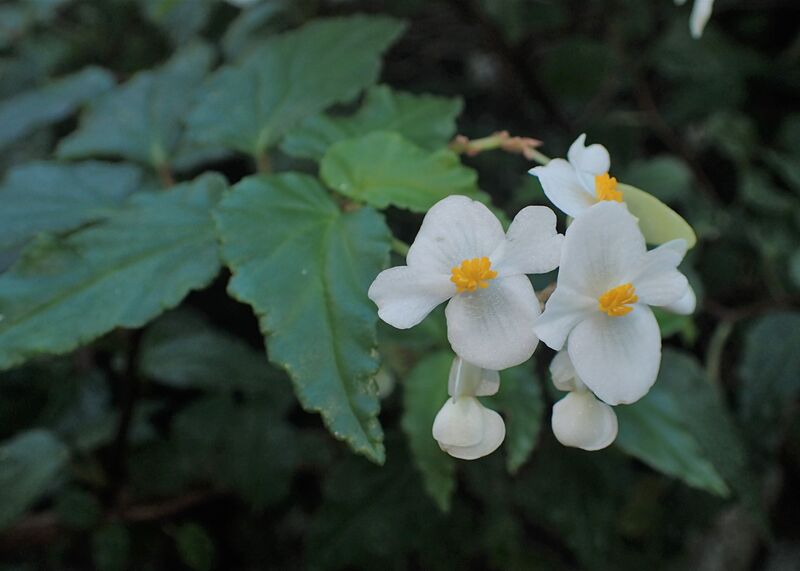
Cuban Holly is a compact, shrubby begonia native to elevated woodland in Cuba, with small, hard, wavy gray-green leaves that genuinely do look a bit like holly -- hence the name. The stems are a striking burgundy red, and the plant produces clusters of pure white flowers that are large by begonia standards, up to 3 cm across. It is a self-pollinating species that flowers readily and has a tidy, bushy habit that makes it a manageable houseplant compared to the larger begonia species.
How to grow Cuban Holly
bright indirect light (3-6 feet
Keep soil consistently moist but not soggy.
60%
68-86°F
Humus-rich, well-draining soil (equal parts
Stem cuttings (4-6 inches, lower
Aphids, slugs, snails, and caterpillars
Fun Facts
Begonia cubensis is a self-pollinator, meaning a single plant can produce seeds without a partner -- an uncommon and practical trait that makes it easy to collect seed and share with other growers.
Toxic to pets
Toxic to dogs and cats; contains calcium oxalate crystals. Keep out of reach of pets and children. Contact your veterinarian if ingestion is suspected.
Sources
- Begonia cubensis (Cuban holly) - RHS Plant Directory (opens in new tab)Botanical Garden
- Begonia cubensis - Plants of the World Online, Kew Science (opens in new tab)Botanical Garden
- Begonia cubensis (Cuban holly) - RHS Plant Directory (opens in new tab)Reference
- Begonia cubensis - Araflora Exotic Flora (opens in new tab)Reference
- Begonia cubensis - Araflora Exotic Flora (opens in new tab)Reference
- Begonia cubensis - Hortipedia (opens in new tab)Reference
- Begonia cubensis - Hortipedia (opens in new tab)Reference
- Begonia cubensis - Plants of the World Online, Kew Science (opens in new tab)Reference
- Begonia cubensis - Wikipedia (opens in new tab)Reference
- Begonia cubensis - Wikipedia (opens in new tab)Reference