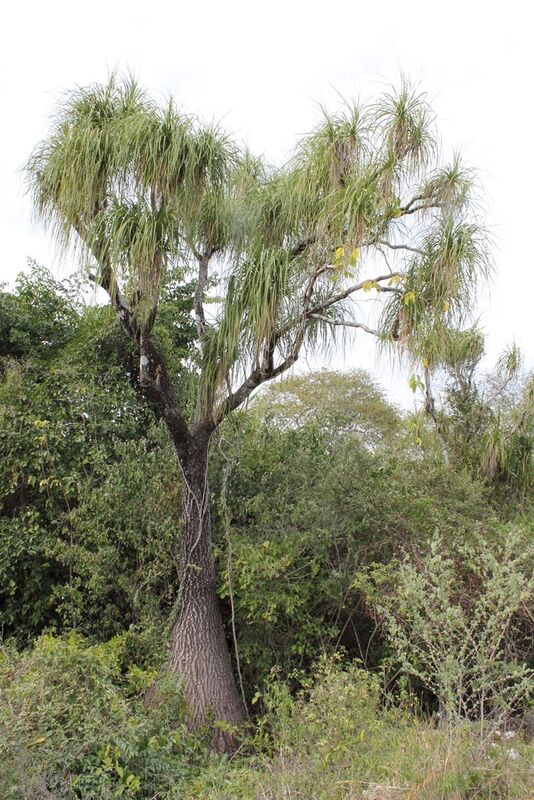
Ponytail
Beaucarnea recurvata
Despite its name, the Ponytail Palm is not a palm at all -- it is a succulent tree more closely related to agave and yucca, and the swollen base (caudex) is a water storage tank that lets it shrug off drought like it is barely a footnote. The cascading rosette of long, strap-like leaves gives it the signature 'ponytail' silhouette, and in the wild individual plants can live for centuries. As a houseplant it is famously hard to kill and totally safe around pets.
How to grow Ponytail
Bright light to full sun
Water every 2-3 weeks in
Tolerates low humidity well; no
60-80°F
Fast-draining, sandy cactus or succulent
Most commonly grown from seed.
Root rot from overwatering is the primary risk.
Fun Facts
The caudex -- that bulging base -- can reach 14 meters (46 feet) in circumference in wild old-growth specimens, and some registered individuals in Mexico are estimated to be 350 years old.
Pet safe
Non-toxic to dogs, cats, and horses per ASPCA. One of the safer houseplant choices for pet owners.
Sources
- Pony Tail - ASPCA Toxic and Non-toxic Plants (opens in new tab)ASPCA
- Beaucarnea recurvata - Missouri Botanical Garden Plant Finder (opens in new tab)Botanical Garden
- Beaucarnea recurvata - Missouri Botanical Garden Plant Finder (opens in new tab)Reference
- Beaucarnea recurvata - Wikipedia (opens in new tab)Reference
- Beaucarnea recurvata - Wikipedia (opens in new tab)Reference
- Pony Tail - ASPCA Toxic and Non-toxic Plants (opens in new tab)Reference
- Ponytail Palm Care Guide - Foliage Factory (opens in new tab)Reference
- Ponytail Palm Care Guide - Foliage Factory (opens in new tab)Reference
- Ponytail Palm, Beaucarnea recurvata - Wisconsin Horticulture Extension (opens in new tab)Reference
- Ponytail Palm, Beaucarnea recurvata - Wisconsin Horticulture Extension (opens in new tab)University Extension