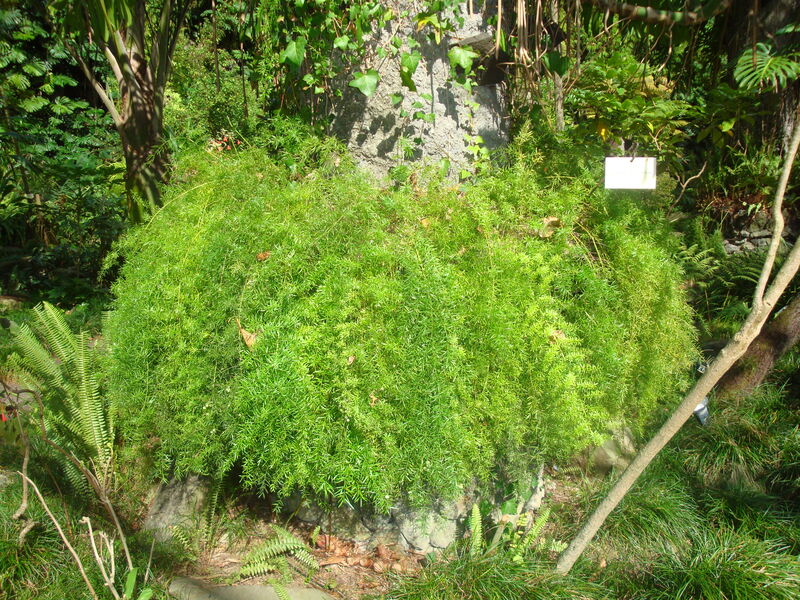
Plume Asparagus
Asparagus densiflorus
Despite the name, this is not a fern - it is a tough perennial in the asparagus family that just happens to have airy, fern-like foliage. The 'Sprengeri' cultivar trails gracefully from hanging baskets while the 'Meyeri' (foxtail fern) grows upright plumes that look like green fox tails. Both are fast-growing, adaptable, and considerably easier to keep alive than any true fern.
How to grow Plume Asparagus
bright indirect light (3-6 feet
water thoroughly (water until it
40%
65-80 F (18-27 C) is ideal.
Well-draining, moderately rich potting mix.
Divide clumps during repotting in
Needle drop from underwatering, low
Fun Facts
Asparagus densiflorus is not a fern at all - it belongs to the Asparagaceae family, making it more closely related to edible asparagus, onions, and garlic than to any true fern.
Toxic to pets
Toxic to cats and dogs per the ASPCA. Repeated skin contact with the foliage causes allergic dermatitis. Berry ingestion causes gastric upset including vomiting, abdominal pain, and diarrhea. The berries are also irritating to human skin. Keep away from pets and children.
Sources
- Asparagus Fern Toxicity - ASPCA (opens in new tab)ASPCA
- Asparagus Fern Toxicity - ASPCA (opens in new tab)ASPCA
- Asparagus Fern 101 - Bloomscape (opens in new tab)Reference
- Asparagus Fern 101 - Bloomscape (opens in new tab)Reference
- Asparagus Fern Care - BBC Gardeners World Magazine (opens in new tab)Reference
- Asparagus Fern Care - BBC Gardeners World Magazine (opens in new tab)Reference
- Asparagus densiflorus Sprengeri Care Indoors - Home Plants Guide (opens in new tab)Reference
- Asparagus densiflorus Sprengeri Care Indoors - Home Plants Guide (opens in new tab)Reference