Flamingo Flower
Anthurium scherzeranum
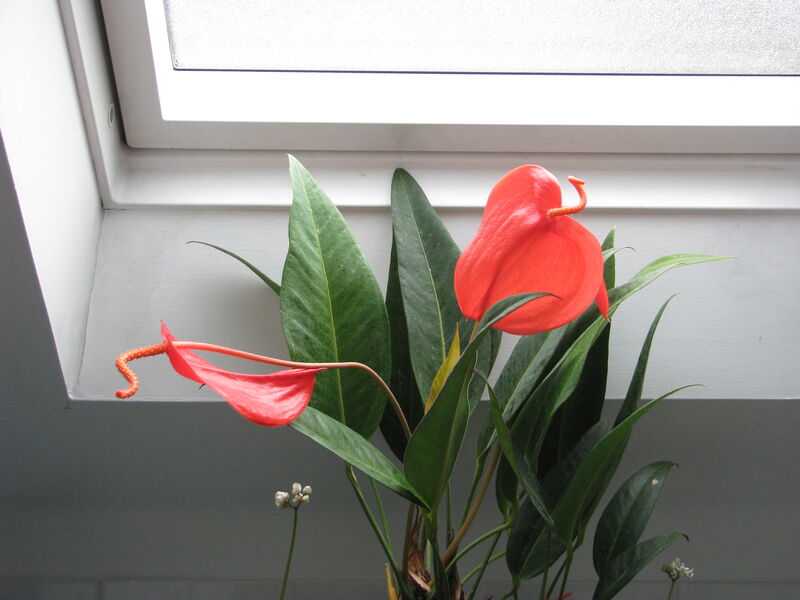
If you want a houseplant that looks like it came from a design catalog but actually blooms, Anthurium scherzeranum is your plant. The waxy, bright red or orange spathes with their curly, pig-tail-like spadices are the real draw, and they can last for months. It is a compact species that stays manageable at around 12-18 inches tall, making it a solid choice for desks and shelves.
How to grow Flamingo Flower
Medium to bright indirect light
Water when the top inch of soil is dry.
70-80%
Keep between 60-90 F (16-32
Well-draining soilless or aroid mix
Divide at the roots during
Root rot from overwatering is the primary issue.
Fun Facts
The colorful part most people call the 'flower' is actually a modified leaf called a spathe; the true flowers are the tiny bumps along the tail-like spadix in the center.
Toxic to pets
Toxic to dogs, cats, and horses per the ASPCA. Toxic principles are insoluble calcium oxalates. Clinical signs include oral irritation, pain and swelling of the mouth, tongue and lips, excessive drooling, vomiting (not in horses), and difficulty swallowing.
Sources
- Flamingo Flower Toxicity - ASPCA (opens in new tab)ASPCA
- Flamingo Flower Toxicity - ASPCA (opens in new tab)ASPCA
- A Fuss-Free Guide to Anthurium Care - Garden Betty (opens in new tab)Reference
- A Fuss-Free Guide to Anthurium Care - Garden Betty (opens in new tab)Reference
- Flamingo Flower Anthurium scherzeranum Care (opens in new tab)Reference
- Flamingo Flower Anthurium scherzeranum Care (opens in new tab)Reference