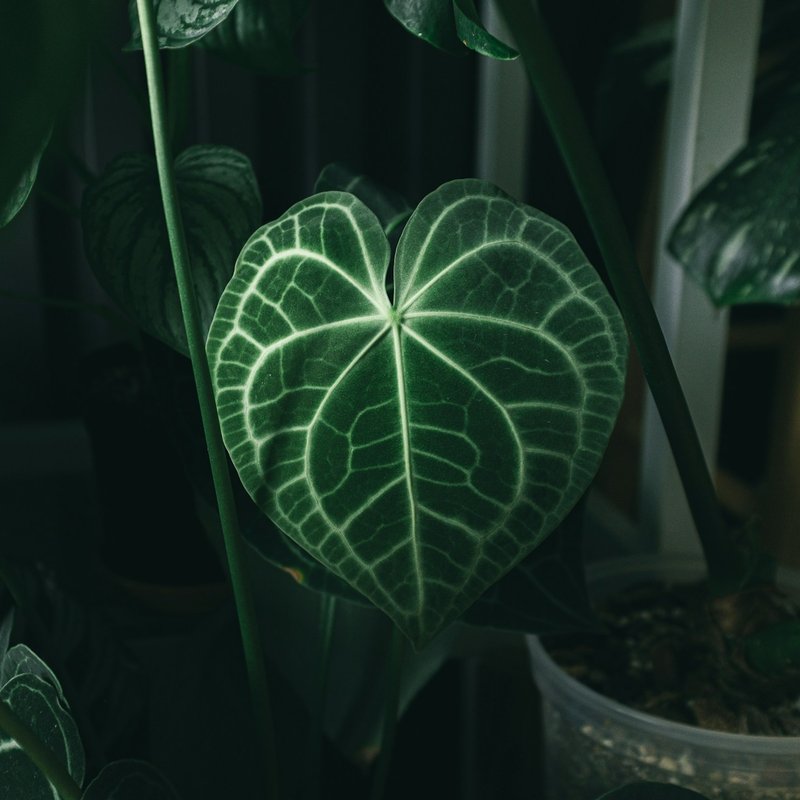
Anthurium Clarinervium
Anthurium clarinervium
Grows on limestone rocks in Chiapas, Mexico, not in soil. Its rock-dwelling origins make it tougher than most aroids and it actually prefers to dry out a bit between waterings.
Buy This Plant - $45.00How to grow Anthurium Clarinervium
Bright Indirect
80%
60-80%
65-73°F
Aroid mix with orchid bark,
Division at repotting time in
Brown tips are the number one complaint.
Fun Facts
This plant grows on limestone rocks in wet forests in Chiapas, Mexico. It's a lithophyte, not an epiphyte. That's why it's tougher than most anthuriums and does great in chunky, fast-draining soil.
The leaves are so thick that people call it the velvet cardboard anthurium. That thickness isn't just for looks. It's an adaptation for storing water between rain events on exposed rock faces. Form follows function!
The name clarinervium is Latin for 'clear-veined,' which is about as straightforward as botanical naming gets. Formally described in 1950, but people in Mexico had been growing it for way longer.
Toxic to pets
Toxic to cats, dogs, and humans. Contains calcium oxalate crystals causing mouth irritation, drooling, and stomach upset.