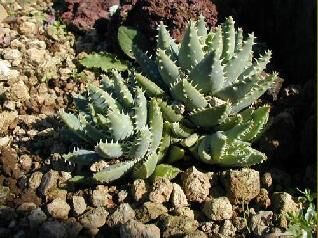
Brevifolia Aloe
Aloe brevifolia
Aloe brevifolia is a compact, slow-growing aloe that forms dense rosettes of short blue-green leaves edged with white teeth -- the teeth, combined with a bumpy leaf surface, earned it the nickname 'Crocodile Plant.' It stays small enough for a sunny windowsill, spreads naturally into attractive clumps over time, and turns rosy pink in full sun. The orange-red flower spikes it sends up in late spring are a nice bonus, and the whole plant is tough enough to largely look after itself once established.
How to grow Brevifolia Aloe
Prefers 6-8 hours of bright direct light daily.
Soak-and-dry method: water deeply, then
Tolerates low humidity well.
70-80°F
50-70%
Produces numerous offsets from the
Scale insects and mealybugs can
Fun Facts
Aloe brevifolia is classified as Endangered on the IUCN Red List, with fewer than 2,000 mature individuals remaining in the wild due to habitat loss exceeding 80% from agriculture, overgrazing, and illegal collection.
Toxic to pets
Toxic to cats, dogs, and rabbits if ingested. The sap causes gastrointestinal upset including vomiting and diarrhea. RHS lists it as harmful if eaten by humans and pets. Keep away from animals that chew plants.
Sources
- Aloe brevifolia - Royal Horticultural Society (opens in new tab)Botanical Garden
- Aloe Brevifolia Care: Tips On Growing The Short Leaved Aloe - Plant Care Today (opens in new tab)Reference
- Aloe Brevifolia Care: Tips On Growing The Short Leaved Aloe - Plant Care Today (opens in new tab)Reference
- Aloe brevifolia (Short-leaved Aloe) - World of Succulents (opens in new tab)Reference
- Aloe brevifolia (Short-leaved Aloe) - World of Succulents (opens in new tab)Reference
- Aloe brevifolia - Royal Horticultural Society (opens in new tab)Reference
- Aloe brevifolia - Wikipedia (opens in new tab)Reference
- Aloe brevifolia - Wikipedia (opens in new tab)Reference
- How to Plant, Grow, and Care for Aloe Brevifolia - Epic Gardening (opens in new tab)Reference
- How to Plant, Grow, and Care for Aloe Brevifolia - Epic Gardening (opens in new tab)Reference