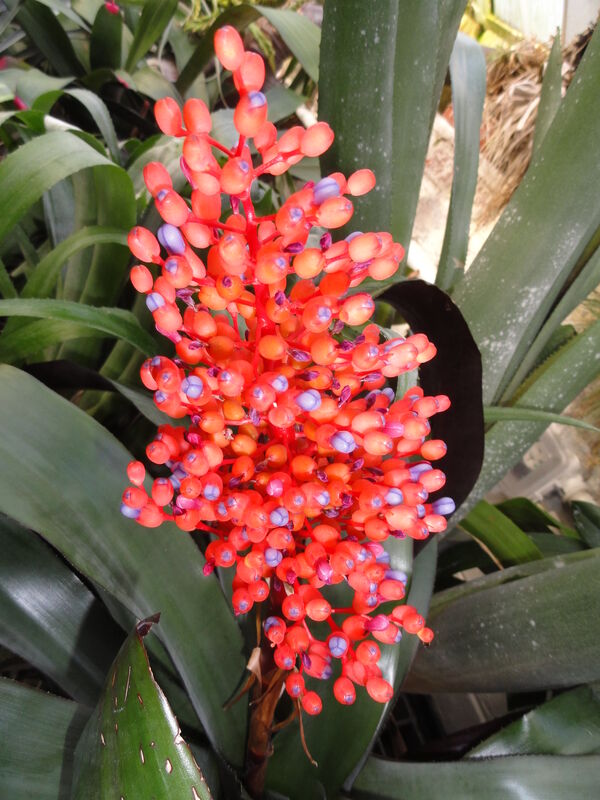
Purplish Coral Berry
Aechmea miniata
Aechmea miniata is a species of flowering plant in the Bromeliaceae family. This species is native to the state of Bahia in eastern Brazil
How to grow Purplish Coral Berry
bright indirect light (3-6 feet
Keep the central cup about
60-80%
Prefers 65 to 80°F (18
Use a fast-draining bromeliad or orchid mix.
Like all Aechmea, this plant
Red spider mites appear in
Fun Facts
Aechmea miniata has a mutualistic relationship with ants in the wild: ants shelter in the rosette and use the central water cup, and in return their droppings and collected prey provide the plant with a steady nutrient supply — research found that ant colonization directly affects the plant's flower size and overall health.
Pet safe
Non-toxic to cats, dogs, and humans. Bromeliads as a family are on the ASPCA non-toxic list. The physical hazard is the sharp, serrated leaf edges - same caution as with Aechmea fasciata.
Sources
- Aechmea Bromeliad Care - Gardening Know How (opens in new tab)Reference
- Aechmea Bromeliad Care — Gardening Know How (opens in new tab)Reference
- Aechmea miniata - GardensOnline Plant Finder (opens in new tab)Reference
- Aechmea miniata — GardensOnline Plant Finder (opens in new tab)Reference
- Aechmea: The Beginner's Bromeliad - Bromeliads.info (opens in new tab)Reference
- Aechmea: The Beginner's Bromeliad — Bromeliads.info (opens in new tab)Reference
- Aechmea miniata - University of Maine Littlefield Garden (opens in new tab)University Extension
- Aechmea miniata — University of Maine Littlefield Garden (opens in new tab)University Extension