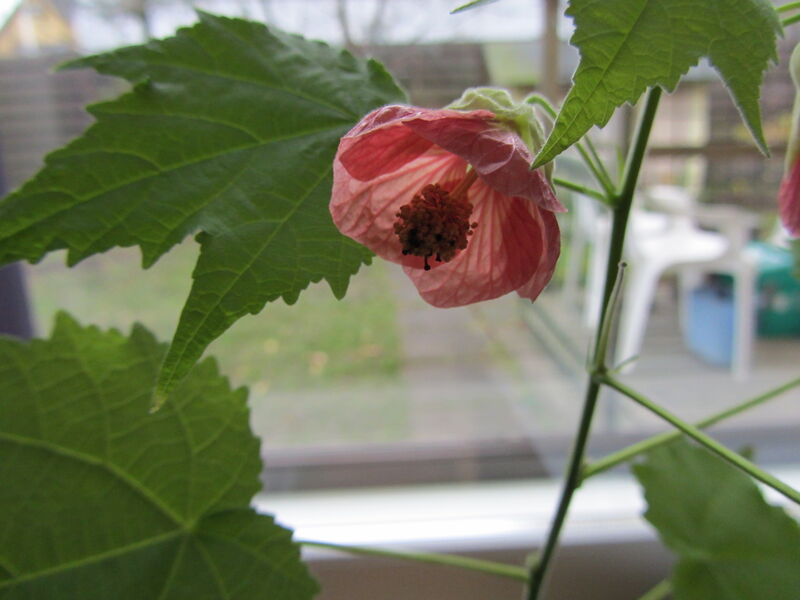
Chinese bellflower
Abutilon hybridum
Abutilon × hybridum is a species name used for a wide variety of different types flowering plants of uncertain origin in the genus Abutilon.[1][2][3] Because of the uncertainty surrounding the name, they are often considered a cultivar group: Abutilon x Hybridum Group or Abutilon Hybridum Group. They are cultigens, not occurring in the wild.[4][5] As with the larger genus Abutilon generally, they have been referred to by the common names Chinese lantern,[6][7] and parlour maple.
How to grow Chinese bellflower
Bright light with at least
Water moderately during active growth,
50%
Prefers a moderate 60 to 75°F (15 to 24°C).
20%
Softwood stem cuttings are the
Spider mites are the most
Fun Facts
The genus name Abutilon traces back to an Arabic word used by the medieval physician Avicenna to describe a mallow-like plant — making its name over a thousand years old.
Pet safe
Non-toxic to cats, dogs, and horses according to the ASPCA. The foliage can cause mild contact dermatitis in sensitive individuals, so wash hands after handling if your skin tends to react to plants.
Sources
- Abutilon - ASPCA Toxic and Non-Toxic Plants (opens in new tab)ASPCA
- Abutilon — ASPCA Toxic and Non-Toxic Plants (opens in new tab)ASPCA
- Abutilon x hybridum - Missouri Botanical Garden Plant Finder (opens in new tab)Botanical Garden
- Abutilon x hybridum — Missouri Botanical Garden Plant Finder (opens in new tab)Botanical Garden
- Abutilon - NC State Extension Gardener Plant Toolbox (opens in new tab)University Extension
- Abutilon — NC State Extension Gardener Plant Toolbox (opens in new tab)University Extension
- Flowering Maple, Abutilon spp. - Wisconsin Horticulture Extension (opens in new tab)University Extension
- Flowering Maple, Abutilon spp. — Wisconsin Horticulture Extension (opens in new tab)University Extension